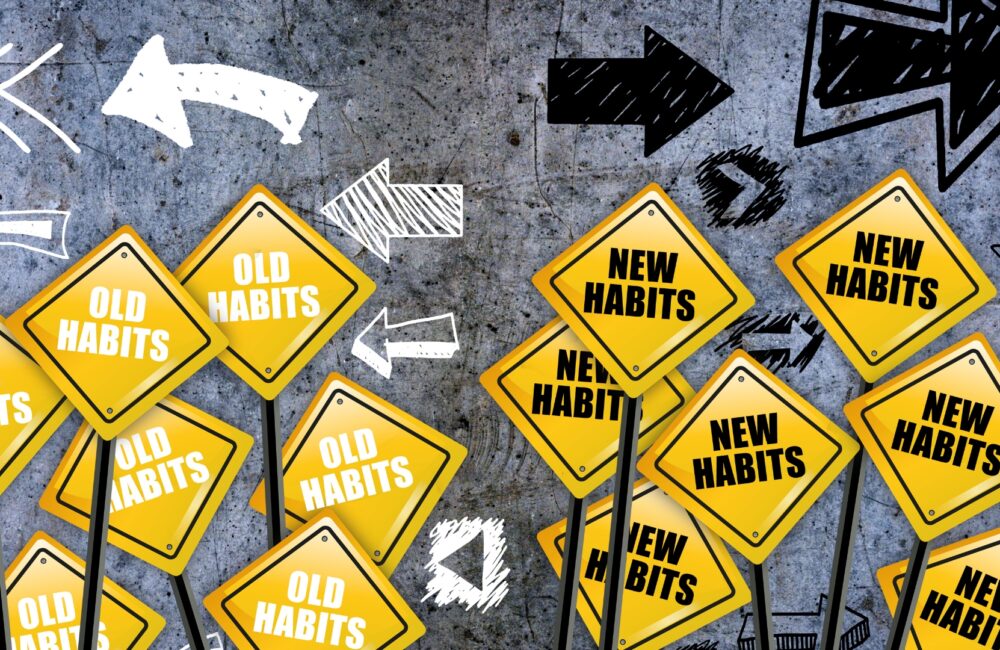

If your habit change isn’t working, the problem may not be laziness or a lack of character. The behaviour may be too vague, too demanding, weakly connected to a cue, or repeatedly undermined by the environment around it. Habit formation is a learning process: a response becomes easier and more automatic when it is repeated in a sufficiently consistent context.
Quick answer: Habit change commonly stalls for five reasons: the target is unclear or not personally meaningful, there is no stable cue, the first step requires too much effort, expectations are unrealistic, or the environment still makes the old behaviour easier. The practical fix is to define one small action, attach it to a visible cue, reduce friction, track repetitions rather than a perfect streak, and adjust the surroundings.
Research review updated: 16 August 2026.
Key Takeaways
- A habit is not merely something done often; it is a learned tendency for a cue to trigger a response with less deliberate effort.
- The popular “21 days” rule is not supported as a universal timeline. A 2024 review found wide variation across people and behaviours.
- Consistent cues, manageable actions, repeated practice and supportive environments are more useful than waiting to feel motivated.
- Missing once does not erase previous learning. Review what blocked the action, make the next repetition easier and restart.
- Difficulty following through can also reflect stress, pain, sleep loss, depression, ADHD, caregiving demands or limited resources—not a simple habit-design failure.
What Does Habit Change Actually Mean?
A habit is a response that becomes more likely when a familiar cue appears. The cue might be a time, place, preceding action, person or emotional state. Repeating “take medication after brushing my teeth,” for example, can gradually strengthen the association between finishing brushing and taking the medication.
Automaticity exists on a continuum; it does not mean acting without any awareness or choice. A 2024 state-of-the-field review cautions that habits are only one influence on real-world behaviour. Intentions, opportunity, skills, consequences and changing circumstances still matter, so forming a habit is neither necessary nor sufficient for every lasting change.
Habit-Formation Evidence at a Glance
| Question | What research found | Important limitation |
|---|---|---|
| How long can a health habit take? | A 2024 review of 20 studies and 2,601 participants reported medians of 59–66 days, means of 106–154 days and individual estimates ranging from 4 to 335 days. | Eleven included studies had a high risk of bias, and the behaviours studied were mainly diet, activity, flossing and similar health actions. |
| Does context consistency matter? | In a trial of 127 insufficiently active adults, consistent- and varied-context plans both increased walking, but only the consistent-context group developed and maintained automaticity. | The intervention concerned walking and lasted four weeks with a four-week follow-up. |
| Do habit interventions help physical activity? | A meta-analysis of 10 studies found a small improvement in physical-activity automaticity (effect size 0.31; 95% CI 0.14 to 0.48). | Results were heterogeneous (I²=64%), so effects varied substantially across studies. |
| Does identity relate to habits? | A 2025 meta-analysis of 19 articles and 13,340 participants found a strong correlation between health-behaviour habit and identity (r=0.55). | Correlation does not establish whether identity creates the habit, the habit shapes identity, or both. |
| Can “if–then” plans help? | A 2026 meta-analysis of 12 comparisons and 2,399 adults found that if–then plans increased fruit and vegetable intake by about 0.29 portions per day versus active controls. | That result is specific to fruit and vegetable intake and should not be generalized to every behaviour. |
5 Reasons Your Habit Change Isn’t Working—and How to Fix It
1. The Goal Is Vague, Borrowed or Disconnected From What Matters
“Get healthier,” “be more productive” and “use my phone less” describe directions, not observable actions. They leave several decisions to the moment of performance: what to do, when to do it and what counts as complete. A goal copied from a friend or trend may also lose priority when its cost becomes obvious.
Identity can be relevant, but it should not become a slogan such as “I am a disciplined person.” The 2025 meta-analysis found a sizeable association between habit and identity, yet the evidence could not establish a one-way causal relationship. Let repeated evidence shape identity gradually: “I am becoming someone who walks after lunch” is more grounded than demanding an instant personality change.
How to fix it:
- Name one behaviour that another person could observe: “Walk for 10 minutes” rather than “move more.”
- Write one personally meaningful reason for doing it, without claiming the habit will transform your life.
- Define success for the next two weeks, then review rather than making a lifetime promise.
Use the values-to-action worksheet to connect a goal with a concrete choice, or check whether the timing and resources are realistic with the goal-readiness assessment.
2. You Have an Intention but No Stable Cue
Good intentions answer what you want; they do not necessarily answer when the response should begin. If the cue changes every day, you must remember and decide again each time. Consistent context can reduce that decision burden. In the randomized walking study, only participants planning walks in consistent contexts developed and maintained automaticity, even though both planning groups initially walked more.
How to fix it: Write an if–then plan that pairs one visible cue with one response:
If I put my lunch plate in the sink on a workday, then I will put on my shoes and walk for 10 minutes.
A routine-based cue (“after breakfast”) can be more resilient than an exact clock time when schedules vary. The cue still needs to occur often enough, be easy to notice and be available in the setting where the action happens. Use the goal action-plan worksheet to write the cue, action and obstacle response in advance.
3. The Starting Version Has Too Much Friction
A new behaviour may require equipment, travel, preparation, multiple decisions or uncomfortable effort before it produces a reward. Research links greater perceived complexity with weaker automaticity, while the 2024 systematic review identified behavioural regulation, preparatory routines, enjoyment and personal choice among the factors associated with stronger habits.
How to fix it:
- Create a minimum version that is useful but easier to start: five minutes of walking, one paragraph of writing or one prepared vegetable with dinner.
- Move preparation earlier: fill the water bottle, place shoes by the door or open the document before the cue occurs.
- Remove one decision by choosing the place, equipment or first step beforehand.
- Increase the behaviour only after the starting version is repeatable. A small beginning is a launch point, not a requirement to remain small forever.
The habit-design worksheet helps you specify a minimum version, cue, friction and recovery plan. If you are unsure which part of the system is weak, use the habits and consistency assessment.
4. Your Timeline and Success Standard Are Unrealistic
A 21-day challenge can provide structure, but it does not establish a universal biological deadline. The 2024 systematic review found that health habits commonly took two to five months in the studies reporting time to automaticity, with enormous individual variation. The original real-world habit study also found that missing one opportunity did not materially disrupt the formation curve.
A streak can be motivating, but it becomes counterproductive when one missed day is interpreted as proof of failure. Automaticity grows through repeated cue–response learning, not moral perfection.
How to fix it:
- Track completed opportunities and restarts, not only an unbroken streak.
- After a miss, record the practical barrier: cue not seen, no time, action too large, unavailable resources or a deliberate choice.
- Change one part of the design and test again. Do not redesign the entire goal after one difficult day.
- Judge progress over weeks, while also considering whether the behaviour is improving your actual life.
If one lapse triggers harsh self-judgment or abandonment, this guide to progress over perfectionism offers a more flexible way to evaluate improvement.
5. Your Environment and Feedback Still Favour the Old Pattern
Old behaviours often have reliable cues and immediate payoffs: a phone is within reach, snacks are visible, the television starts with one button, or a familiar route passes the same shop. The desired behaviour may have the opposite design—its tools are hidden and its reward is delayed.
A 2024 review of 41 digital physical-activity studies found that prompts and cues appeared in 80%, goal setting in 65% and self-monitoring in 60%. Those figures describe commonly used design techniques; they do not prove that each element works independently for every person.
How to fix it:
- Make the desired response visible: place the book on the pillow or the fruit at eye level.
- Add friction to the old response: sign out, move the item, disable nonessential notifications or change the route.
- Substitute rather than leave a vacuum: decide what you will do when the old cue appears.
- Use light-touch feedback: one checkbox can reveal whether the cue or action needs adjustment without turning life into a dashboard.
- Ask for specific support: request a reminder, shared walk or protected time rather than vague accountability.
For additional replacement and environment strategies, read how to break unhelpful patterns and build healthier habits.
A 14-Day Habit Reset
| When | What to do | Question to answer |
|---|---|---|
| Day 1 | Choose one observable action and a realistic minimum version. | What exactly counts as done? |
| Day 2 | Pair the action with one stable, visible cue. | When this cue appears, what will I do? |
| Day 3 | Prepare the environment and reduce one source of friction. | What can be ready before I need it? |
| Days 4–10 | Repeat when the cue occurs and record done, missed or deliberately skipped. | Did the cue occur and was the action feasible? |
| Day 11 | Review patterns without grading your character. | Which barrier appeared more than once? |
| Days 12–14 | Adjust one variable—cue, minimum action, preparation or timing—and retest. | Did the change make starting more reliable? |
Fourteen days is a review cycle, not a promise that the habit will be automatic. Continue if the behaviour is useful, feasible and aligned with your priorities.
When It May Not Be a Habit Problem
Habit advice can become unfair when it ignores health and circumstances. Starting, remembering or switching tasks may be harder during depression, severe stress, sleep deprivation, chronic pain, medication effects or executive-function difficulties. People may also lack time, money, safety, transport, privacy or control over their schedules. In those cases, “try harder” is not an adequate intervention.
Persistent problems across several areas of life may warrant professional assessment. For example, ADHD paralysis is an informal description for task-initiation or switching difficulties that may need more than a reminder or habit tracker.
Advertising and partnership disclosure: This article contains no paid product recommendation. A clearly labelled partnership could appropriately feature a privacy-conscious habit tracker, evidence-aligned coaching service, journal or planning tool beside the 14-day reset—not inside the research claims. Sponsors cannot determine conclusions, health claims require appropriate evidence, and paid links or placements must be labelled sponsored or advertisement. An advertisement is not a professional endorsement.
Frequently Asked Questions
How long does it take to form a habit?
There is no single deadline. A 2024 review reported medians of 59–66 days and means of 106–154 days in the studies that measured time, with estimates ranging from 4 to 335 days. Behaviour complexity, repetition, context and the person all matter.
Can a habit really form in 21 days?
Possibly for a simple action in some people, but 21 days is not a universal rule. Use it as an initial experiment or review point, not a guaranteed automaticity deadline.
Does missing one day ruin a habit?
No. In a 12-week real-world study, missing one opportunity did not materially affect the habit-formation process. Repeated misses are useful information about the cue, action or environment, but one lapse does not erase earlier repetitions.
Why is motivation not enough?
Motivation changes with mood, stress, energy and competing demands. A stable cue and lower-friction response can make action less dependent on remembering or feeling enthusiastic. Motivation still matters, especially when choosing and revising the goal.
What is the best cue for a new habit?
The best cue is noticeable, occurs often enough and is available where the action can happen. A reliable preceding routine—after breakfast, after closing a work meeting or after brushing your teeth—may be easier to use than an inconsistent clock time.
Can a habit-tracking app help?
It may support reminders, feedback and self-monitoring, but an app cannot make an unrealistic behaviour feasible. Choose the lightest tool that answers a useful question, review its privacy practices and avoid paying for promises of guaranteed transformation.
The Bottom Line
When habit change isn’t working, diagnose the design before judging yourself. Clarify the action, connect it to a stable cue, reduce the first step, allow a realistic learning period and shape the environment. Then review whether the behaviour is genuinely helping. Sustainable change is not a perfect streak; it is a repeatable system that can be adjusted when life changes.
Research Sources
- Time to Form a Habit: Systematic Review and Meta-Analysis of Health Behaviour Habit Formation
- What Is Habit and How Can It Be Used to Change Real-World Behaviour?
- Consistent Contexts in Developing a Walking Habit: Randomized Comparison
- Habit-Formation Interventions and Physical-Activity Habit Strength: Meta-Analysis
- Habit and Identity in Health Behaviours: Systematic Review and Meta-Analysis
- If–Then Plans for Fruit and Vegetable Consumption: Systematic Review and Meta-Analysis
- Digital Behaviour-Change Intervention Designs for Habit Formation: Systematic Review
- How Are Habits Formed? Modelling Habit Formation in the Real World
Educational note: This article provides general information, not individualized medical or mental-health advice. If difficulty initiating or changing behaviour is persistent, distressing or impairing daily life, consider speaking with a qualified professional.