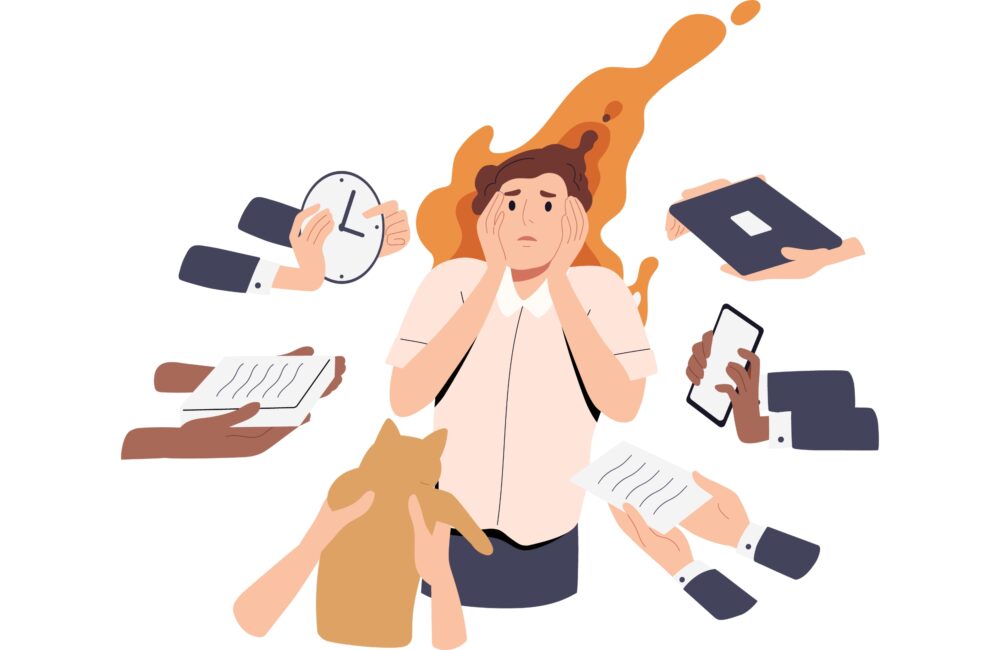

ADHD paralysis is an informal term—not a medical diagnosis—for feeling unable to start, choose, switch or finish a task despite intending to act. People often describe being mentally “stuck” when a task is unclear, unrewarding, emotionally loaded or made up of too many steps. The experience may relate to ADHD difficulties with attention regulation, organisation, working memory, time management and self-regulation, but it is not literal paralysis and it is not unique to ADHD.
Medical disclaimer: This article is for education only. It cannot diagnose ADHD or replace assessment, treatment or medication advice from a qualified health professional. Sudden weakness, inability to move, confusion, fainting, speech changes or another abrupt neurological symptom is not “ADHD paralysis”—seek urgent medical care. If you may harm yourself or cannot stay safe, contact your local emergency service or crisis line now.
Because researchers and clinicians do not use one standard definition of ADHD paralysis, there is no reliable prevalence figure for the term itself. ADHD, however, is a recognised neurodevelopmental disorder. A U.S. Centers for Disease Control and Prevention (CDC) analysis estimated that 15.5 million U.S. adults, or 6.0%, reported a current ADHD diagnosis in 2023. More than half were diagnosed in adulthood, although formal diagnostic criteria require symptoms to have been present before age 12.
What ADHD paralysis means—and what it does not
ADHD is defined by persistent, impairing patterns of inattention and/or hyperactivity-impulsivity across more than one setting. The inattentive presentation can include difficulty organising work, managing time, following instructions, finishing tasks, sustaining effort and resisting distraction. Those features can make the gap between “I intend to do this” and “I have started” feel unusually large.
“ADHD paralysis” is a popular shorthand for that experience. It is not a fourth ADHD presentation, a separate disorder, a formal stage of ADHD or proof that someone has ADHD. Terms such as task paralysis, choice paralysis and mental paralysis may be useful descriptions, but they are not validated clinical subtypes. Likewise, scrolling, gaming or hyperfocusing can become competing activities; “scrolling paralysis” is not a recognised diagnosis.
For a broader look at how these difficulties may appear on the job, see ADHD at work: focus and productivity strategies.
Possible signs of ADHD-related task paralysis
The pattern varies between people and situations. Common descriptions include:
- knowing a task matters but repeatedly failing to begin;
- being unable to identify the first concrete step;
- opening several tasks but not progressing on the priority task;
- feeling overwhelmed by options or unable to choose between them;
- losing track of time or underestimating how long preparation will take;
- having difficulty switching away from an engaging activity;
- waiting until a deadline creates enough urgency to act; and
- feeling shame, frustration or anxiety after repeated delays.
These experiences are real, but none is specific to ADHD. Occasional avoidance is common. A clinical ADHD evaluation looks for a persistent pattern beginning in childhood, occurring in at least two settings and causing meaningful impairment—not one difficult project or a productivity slump.
Why starting or switching tasks can feel difficult
Executive demands
Beginning a task is not one action. It can require holding the goal in mind, choosing a priority, estimating time, sequencing steps, resisting distractions and monitoring progress. When several of those demands occur together, the entry point may become hard to find. “Executive dysfunction” describes difficulty with these control processes; it is not a moral failure and it does not mean a person lacks intelligence or effort.
Reward timing, task value and delay
Tasks with immediate feedback or interest may be easier to engage with than tasks whose reward is distant. A preregistered 2026 survey of 640 adults found that higher self-reported ADHD inattention was associated with more procrastination. Sensitivity to delay, lower perceived task value and flexible goal adjustment statistically helped explain the association. This cross-sectional survey—only 68 participants reported an ADHD diagnosis—cannot prove cause and effect, but it supports a more nuanced model than “not enough willpower.”
Emotional load and perfectionism
Fear of mistakes, uncertainty, shame from previous delays and an all-or-nothing standard can add another layer of avoidance. Anxiety may make a choice feel unusually high-stakes, while depression can reduce energy and interest. If perfectionism is part of the loop, this guide to choosing progress over perfectionism may offer a gentler starting point.
Environment, sleep and competing demands
Noise, interruptions, unclear instructions, too many open tabs, competing caregiving demands and inaccessible work systems can increase executive load. Poor sleep, burnout, pain, medication effects and substance use can worsen concentration. These factors may amplify a task-initiation problem without being the cause of ADHD itself.
A careful note about dopamine
Dopamine and noradrenaline systems are involved in attention, motivation and the action of several ADHD medicines. But ADHD paralysis cannot be explained as a simple dopamine shortage, a burst of dopamine “trapping” someone in one activity, or stagnation in the central nervous system. ADHD arises from complex genetic and neurodevelopmental factors, and individuals differ considerably.
Could something else be causing the “stuck” feeling?
| Possible explanation | Clues worth discussing with a professional |
|---|---|
| ADHD | Longstanding symptoms from childhood, across settings, with other attention, organisation or impulse-control difficulties |
| Anxiety or perfectionism | Worry, fear of a wrong choice, repeated checking, reassurance-seeking or avoidance |
| Depression | Persistent low mood or loss of interest, low energy, hopelessness, sleep or appetite changes |
| Autistic overload or burnout | Sensory or social overload, need for recovery, difficulty with transitions; requires its own assessment |
| Sleep or physical-health problem | New fatigue, snoring, pain, hormonal or neurological symptoms, or a sudden change from usual functioning |
| Medication or substance effect | Symptoms begin or change after a medicine, caffeine or other substance is started, stopped or adjusted |
| Ordinary procrastination | Occasional or task-specific delay without a persistent, cross-setting pattern of ADHD symptoms |
Stress, sleep disorders, anxiety, depression and physical conditions can resemble or worsen ADHD symptoms. Our overview of anxiety symptoms and alternative explanations can help you prepare questions, but only a qualified professional can diagnose the cause.
A practical 10-minute “unstuck” plan
The goal is not to force perfect productivity. It is to lower the number of decisions needed to begin. Try one or two steps rather than building an elaborate new system:
- Define “done.” Write one observable finish line: “email the two-page draft,” not “work on report.”
- Name the first physical action. Examples include opening the document, putting one bill on the desk or writing the recipient’s name.
- Shrink the scope. Choose a minimum version that can be completed imperfectly. You can expand it later.
- Reduce choices. If several tasks compete, select the one with the nearest real consequence or ask another person to confirm the priority.
- Externalise memory and time. Put the next three steps where you can see them and use a calendar alert or short visual timer.
- Remove one friction point. Gather the missing file, silence one notification source or move the phone out of reach.
- Add a cue or supportive presence. A colleague, friend or virtual co-working partner can provide accountability. This is often called body doubling; many people find it useful, but direct clinical evidence remains limited.
- Work for a brief, defined block. At the end, record the next action before stopping so re-entry is easier.
A system should reduce friction, not become another standard to fail. The habit design worksheet can help you test one cue and one minimum action at a time. For decision overload, see how anxiety affects decision-making.
Evidence-based ADHD treatment
There is no separately approved treatment for “ADHD paralysis.” When task initiation is part of ADHD-related impairment, treating ADHD and any co-occurring conditions may improve functioning.
Medication
ADHD medication must be prescribed and monitored. A 2025 BMJ umbrella review re-analysed 221 intervention-and-outcome combinations from 47 meta-analytic reports. In adults, atomoxetine, cognitive behavioural therapy (CBT) and methylphenidate—and amphetamines when analyses were limited to higher-quality trials—had at least moderate-certainty evidence of short-term benefit for core ADHD symptoms. No intervention had high-certainty long-term evidence, so ongoing monitoring and shared decision-making remain important.
A 2024 meta-analysis also found that longer-term methylphenidate treatment improved measured attention, inhibition, reaction time and working memory with small-to-medium effects, while atomoxetine improved most of those domains but not working memory in the analysed trials. Cognitive-test improvement is not a guarantee that every daily task will become easy, and medicines have contraindications and side effects. Never share medication or buy stimulants outside a regulated pharmacy.
CBT and behavioural skills
CBT adapted for ADHD can address planning, prioritising, distractibility, avoidance and unhelpful beliefs developed after years of difficulty. Behavioural support can make prompts, rewards and consequences more immediate and consistent. Learn more about how CBT for ADHD works.
Environmental modifications and accommodations
Written instructions, fewer simultaneous priorities, intermediate deadlines, quiet work areas, scheduled check-ins and assistive technology can reduce unnecessary executive load. The appropriate accommodation depends on the person, role and local law. Working from home helps some people and creates more distraction or isolation for others; it is not universally better.
Sleep, stress and co-occurring conditions
Exercise, regular meals, adequate sleep and stress-management practices may support overall functioning, but they are not replacements for evidence-based ADHD care. Anxiety, depression, trauma, substance use and sleep disorders may need treatment in their own right. These practical stress-management approaches can complement—not substitute for—professional care.
How to evaluate ADHD apps, coaching and productivity tools
A visual timer, task manager, reminder system or virtual co-working service may reduce friction for some people. ADHD coaching can provide practical structure, but credentialing and evidence vary, and a coach does not replace a clinician who diagnoses or prescribes. Before paying, ask:
- Does the product solve one clearly defined barrier, or does it promise to “fix” ADHD?
- Are clinical claims supported by peer-reviewed trials on the actual product?
- What qualifications does a coach or clinician hold, and are they valid where you live?
- How are health, productivity and AI-input data stored, shared or used for model training?
- Is the full price, automatic renewal, cancellation policy and free alternative clear?
Advertising and collaboration disclosure: No product or provider named in this editorial guide is a paid endorsement at the time of this update. Display ads may appear separately. Any future sponsored or affiliate placement should be prominently labelled, kept independent from diagnosis and treatment claims, and vetted for evidence, accessibility, privacy, transparent pricing and safety.
Potentially suitable commercial categories include visual timers, low-friction planning tools, virtual co-working services, credentialed ADHD coaching, workplace-support services and properly licensed ADHD assessment or telehealth providers. Unvalidated diagnostic quizzes, stimulant sellers, supplements or nootropics marketed as treatments, and “dopamine reset” or cure claims are not appropriate partners for a medical-information article.
When to seek professional help
Consider an assessment when problems with starting, organising or finishing tasks are longstanding, occur across settings and interfere with education, work, finances, relationships, health care or self-care. Seek help sooner if the pattern is new, rapidly worsening or accompanied by persistent low mood, severe anxiety, substance use, major sleep problems or inability to meet basic needs.
A thorough ADHD evaluation includes developmental history, current symptoms, impairment in more than one setting and possible alternative explanations. A questionnaire can support an assessment but cannot diagnose ADHD by itself. These signs it may be time to see a therapist can help you think about the next step.
Frequently asked questions
Is ADHD paralysis an official diagnosis?
No. It is an informal description of feeling stuck with task initiation, choices or switching. Clinicians diagnose ADHD and other conditions using established criteria; they do not diagnose ADHD paralysis as a separate disorder.
Is ADHD paralysis the same as laziness?
No character judgement can explain a symptom pattern. ADHD can make task initiation and self-regulation harder. However, not every delay is caused by ADHD, so avoiding shame should be paired with an honest look at the task, environment, health and available support.
How long does ADHD paralysis last?
There is no diagnostic duration because the term is not a clinical condition. A stuck period may last minutes or much longer, depending on the task, fatigue, stress, environment and support. Frequent impairment deserves assessment.
Can medication help ADHD paralysis?
Medication can reduce core ADHD symptoms and may improve aspects of attention and executive functioning for some people. It is not specifically approved for “ADHD paralysis,” does not work identically for everyone and must be selected and monitored by a qualified prescriber.
Does body doubling work?
Some people report that working beside another person—physically or virtually—makes starting and staying with a task easier. It is a low-risk productivity support when boundaries and privacy are respected, but direct clinical-trial evidence is limited; it should not be advertised as a treatment.
What is the fastest way to get unstuck?
Write one visible finish line, choose the smallest physical first action and remove one source of friction. If the task still feels impossible, check whether information, rest, emotional support or a different priority is actually needed.
Key takeaways
- ADHD paralysis is a useful informal description, not a diagnosis or validated ADHD subtype.
- Task initiation may involve executive demands, reward timing, emotional load, sleep and environmental friction—not a simple dopamine shortage.
- Depression, anxiety, autistic overload, sleep problems, physical illness and substance or medication effects can produce a similar stuck feeling.
- Reducing the task to one visible action, externalising time and memory, and lowering friction may help in the moment.
- Evidence-based ADHD care can include monitored medication, CBT, behavioural support and appropriate accommodations.
References
- National Institute of Mental Health. Attention-Deficit/Hyperactivity Disorder: What You Need to Know. Revised 2024.
- Centers for Disease Control and Prevention. Data on ADHD in Adults. Updated 1 June 2026.
- Staley BS, Robinson LR, Claussen AH, et al. Attention-Deficit/Hyperactivity Disorder Diagnosis, Treatment, and Telehealth Use in Adults—United States, October–November 2023. MMWR. 2024;73:890–895.
- Gosling CJ, Garcia-Argibay M, De Prisco M, et al. Benefits and harms of ADHD interventions: umbrella review and platform for shared decision making. BMJ. 2025;391:e085875. doi:10.1136/bmj-2025-085875.
- Netzer Turgeman R, Pollak Y. What Are You Waiting For?! Roles of Motivation, Goal Orientation, and Emotion Regulation in Explaining the Link Between ADHD and Procrastination. Journal of Attention Disorders. 2026;30(5):694–704.
- Isfandnia F, El Masri S, Radua J, Rubia K. The effects of chronic administration of stimulant and non-stimulant medications on executive functions in ADHD: a systematic review and meta-analysis. Neuroscience & Biobehavioral Reviews. 2024;162:105703.
- National Institute for Health and Care Excellence. Attention deficit hyperactivity disorder: diagnosis and management (NG87). Current guidance.