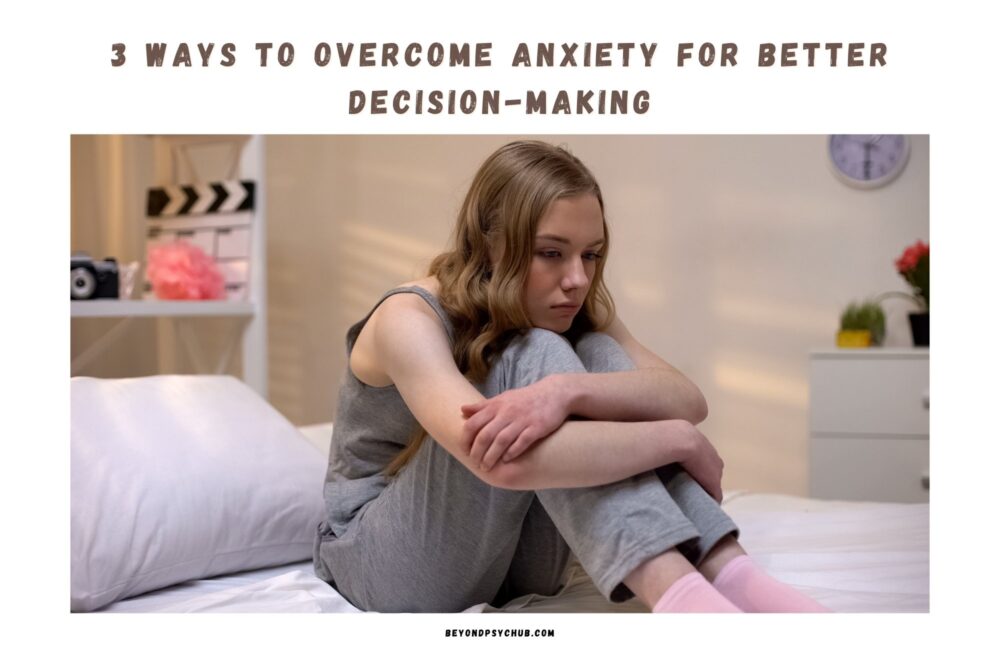

Anxiety can make even ordinary choices feel unusually high-stakes. You may compare options for hours, ask several people for reassurance, delay until the last minute, or make a quick choice simply to escape the discomfort.
This does not mean you are incapable of making good decisions. Anxiety changes how the mind responds to uncertainty and possible threat. When you understand that pattern, you can slow it down, use a clearer process, and decide without waiting to feel completely certain.
The goal is not to eliminate all anxiety before making a choice. Some uncertainty is unavoidable. The aim is to reduce anxiety enough to think, identify what matters, and take a reasonable next step.
Important: If anxiety is persistent, causes panic, disrupts sleep or daily functioning, or prevents you from making necessary health, financial, work, or relationship decisions, consider speaking with a qualified mental-health professional.
How Anxiety Can Affect Decision-Making
Anxiety is a normal response to perceived danger or uncertainty. Anxiety disorders involve more than occasional worry: the fear may persist, appear across many situations, and interfere with daily life.
Research shows that anxiety can influence how people estimate risk, notice possible threats, learn from uncertain outcomes, and choose between avoidance and potential reward. The exact pattern differs from person to person, but several common difficulties appear.
Threats feel more important than opportunities
An anxious mind may give extra attention to what could go wrong. A person considering a new job may focus almost entirely on the possibility of failure while giving less weight to salary, growth, support, or interest.
Uncertainty becomes difficult to tolerate
Most real decisions come with incomplete information. Anxiety may create a strong urge to keep researching until certainty appears. Because perfect certainty rarely comes, the person remains stuck.
Avoidance provides short-term relief
Postponing a decision can reduce anxiety temporarily. That relief teaches the brain to avoid again. Over time, delayed decisions may create tighter deadlines, fewer options, and more anxiety.
Reassurance replaces personal judgment
Advice can be useful, but repeatedly asking others to confirm the same choice may make self-trust weaker. The relief usually lasts only until another doubt appears.
Physical arousal reduces mental space
A racing heart, tense muscles, rapid breathing, nausea, or a feeling of panic can make it harder to hold several facts in mind. Anxiety does not switch off the brain or reduce thinking by a fixed percentage, but intense arousal can make concentration and flexible thinking more difficult.
For a broader overview, see our guide to the common symptoms and causes of anxiety.
Three Evidence-Based Ways to Make Better Decisions
1. Regulate your body before analysing the choice
When anxiety is high, trying to “think harder” may add more mental noise. Start by lowering physical arousal. This does not solve the decision, but it can create enough space to evaluate it more clearly.
Try one of these brief options:
- Slow breathing: Breathe gently without forcing a deep breath. Count slowly as you breathe in and out, allowing the exhale to be comfortable.
- 5-4-3-2-1 grounding: Name five things you see, four you feel, three you hear, two you smell, and one you taste.
- Brief movement: Walk, stretch, or change your posture for a few minutes.
- Delay only when useful: If the decision is not urgent, pause for 20 minutes or sleep on it. Set a specific time to return so the pause does not become avoidance.
Breathing and grounding are coping tools, not cures. They may reduce immediate distress, but persistent anxiety may still need treatment. Our article on mindfulness exercises for anxiety offers additional present-focused techniques.
2. Use a structured decision process
Anxiety makes decisions feel unlimited. Structure narrows the problem.
Use the following steps:
- Name the decision in one sentence. Example: “Do I accept this job offer?”
- Set a deadline. Choose a realistic time for deciding. A deadline prevents endless research.
- Identify three to five criteria. These might include safety, cost, values, health, time, relationships, or long-term opportunity.
- Limit the options. Compare the most realistic choices rather than every imaginable possibility.
- Separate facts from predictions. Write what is known, what is estimated, and what is feared.
- Choose a good-enough option. Many decisions do not have one perfect answer.
- Plan the first action. Decide what you will do next, such as send an email, book an appointment, or gather one missing fact.
For reversible choices, consider a small experiment. Instead of asking, “Should I completely change careers?” ask, “Can I speak with two people in the field or take one introductory course?” Smaller actions produce information without requiring an immediate permanent commitment.
3. Challenge anxious predictions and reduce avoidance
Cognitive behavioral therapy, or CBT, is a well-studied treatment for anxiety. It helps people identify automatic thoughts, evaluate them more realistically, and change avoidance patterns.
Use these questions when anxiety predicts disaster:
- What am I predicting?
- What evidence supports that prediction?
- What evidence does not support it?
- Am I treating a possibility as a certainty?
- What is the most likely—not the worst—outcome?
- Could I cope if the choice did not work perfectly?
- What would I tell a friend in the same situation?
Then take one action that moves toward the decision rather than away from it. This might mean making the phone call you have avoided, requesting information, or choosing between two acceptable options.
Learn more about this approach in our guide to CBT for anxiety.
A Simple Decision Worksheet
| Prompt | Example |
|---|---|
| What decision am I making? | Whether to apply for a new role |
| When must I decide? | Friday at 5 p.m. |
| What facts do I know? | Salary, location, responsibilities, application date |
| What am I predicting? | “I will embarrass myself in the interview” |
| What matters most? | Growth, manageable commute, supportive manager |
| What is reversible? | Applying does not require accepting the job |
| What is the next small step? | Update the first section of my résumé |
Habits That Can Quiet Decision Anxiety
Daily habits may support anxiety treatment and clearer thinking, although they are not substitutes for professional care.
- Protect sleep: Fatigue can increase irritability and reduce concentration.
- Review caffeine: High caffeine intake can worsen restlessness, rapid heartbeat, and sleep problems in some people.
- Move regularly: Physical activity may reduce anxiety symptoms and provide a break from rumination.
- Schedule worry: Write concerns down and review them during a planned 15-minute period rather than throughout the day.
- Reduce unnecessary choices: Use routines for low-impact decisions such as meals or clothing when this genuinely saves time.
- Keep a decision record: Note what you chose, why, and what happened. This can reveal that many feared outcomes did not occur.
When Advice From Others Helps—and When It Does Not
Other people can provide information, identify blind spots, and offer emotional support. Advice is most useful when you ask someone with relevant knowledge and explain the specific question.
Reassurance may be becoming unhelpful when you:
- ask several people the same question;
- feel relief only briefly;
- keep changing your mind after each opinion;
- expect another person to guarantee the outcome; or
- avoid taking responsibility for a reasonable choice.
Try asking, “What information am I missing?” rather than “Tell me which choice is right.”
Common Myths About Anxiety and Decisions
| Myth | Reality |
|---|---|
| I must feel calm before deciding. | You can make a thoughtful choice while some anxiety remains. |
| More research always leads to a better decision. | After a point, more information may feed rumination without changing the choice. |
| A good decision guarantees a good result. | Good decisions use available information; outcomes still involve uncertainty. |
| Choosing quickly means being confident. | Speed may reflect clarity, but it may also reflect avoidance of discomfort. |
| Grounding treats an anxiety disorder. | Grounding may reduce immediate distress but does not replace evidence-based treatment. |
| Indecision is always caused by anxiety. | Depression, ADHD, trauma, sleep loss, perfectionism, medical conditions, and lack of information may also contribute. |
When to Seek Professional Help
Professional support may be appropriate when anxiety lasts for weeks, is difficult to control, causes repeated avoidance, or interferes with work, study, relationships, health, sleep, or routine decisions.
Treatment may include psychotherapy, medication, or both, depending on the type and severity of anxiety and the person’s preferences and medical needs. CBT is commonly used, and acceptance and commitment therapy may also help some people.
A primary-care clinician, psychologist, psychiatrist, licensed therapist, or appropriately qualified mental-health professional can assess symptoms and discuss options. Review these signs it may be time to see a therapist when deciding whether to seek support.
Seek urgent local help if you have thoughts of suicide or self-harm, cannot keep yourself safe, experience severe confusion, or are unable to care for basic needs. Contact emergency services or a crisis service in your location and involve a trusted person when possible.
Key Takeaways
- Anxiety can increase threat focus, uncertainty, avoidance, overthinking, and reassurance-seeking.
- You do not need complete calm or certainty to make a reasonable decision.
- Regulate physical arousal, use a structured process, and challenge anxious predictions.
- Set research limits and decision deadlines to reduce rumination.
- Grounding and lifestyle habits can support coping but do not replace treatment.
- Persistent or disabling anxiety deserves professional assessment.
Frequently Asked Questions
Why does anxiety make simple decisions difficult?
Anxiety can increase attention to possible threats and create a strong need for certainty. This may lead to excessive comparison, avoidance, or repeated reassurance-seeking.
How long should I spend making a decision?
It depends on the decision’s importance, reversibility, and deadline. Set a reasonable time limit and focus on the information that could genuinely change your choice.
Should I trust my gut when anxious?
Strong feelings may contain useful information, but anxiety can also make threat feel more likely. Pause, check facts, and compare the feeling with your values and evidence.
Can journaling improve decision-making?
It may help identify fears, predictions, values, and repeated patterns. Journaling is most useful when it leads to a clear next step rather than more rumination.
What is decision paralysis?
Decision paralysis is an informal term for feeling unable to choose because options, consequences, or uncertainty feel overwhelming. It is not a diagnosis and can have several causes.
Can medication help with decision anxiety?
Medication can reduce symptoms of an anxiety disorder for some people, which may make daily functioning easier. A qualified prescriber should assess benefits, risks, and appropriate treatment.
How do I stop asking everyone for reassurance?
Choose one relevant person, ask for information rather than certainty, set a decision deadline, and practise accepting that no one can guarantee the outcome.
References
- National Institute of Mental Health: Generalized Anxiety Disorder
- National Institute of Mental Health: Psychotherapies
- Hartley and Phelps: Anxiety and Decision-Making
- Bishop and Gagne: Anxiety, Depression, and Decision Making
- Hein et al.: State Anxiety, Uncertainty, and Reward Learning
- NHS: Breathing Exercises for Stress
This article is for education only and does not replace assessment, diagnosis, or treatment from a qualified healthcare professional.