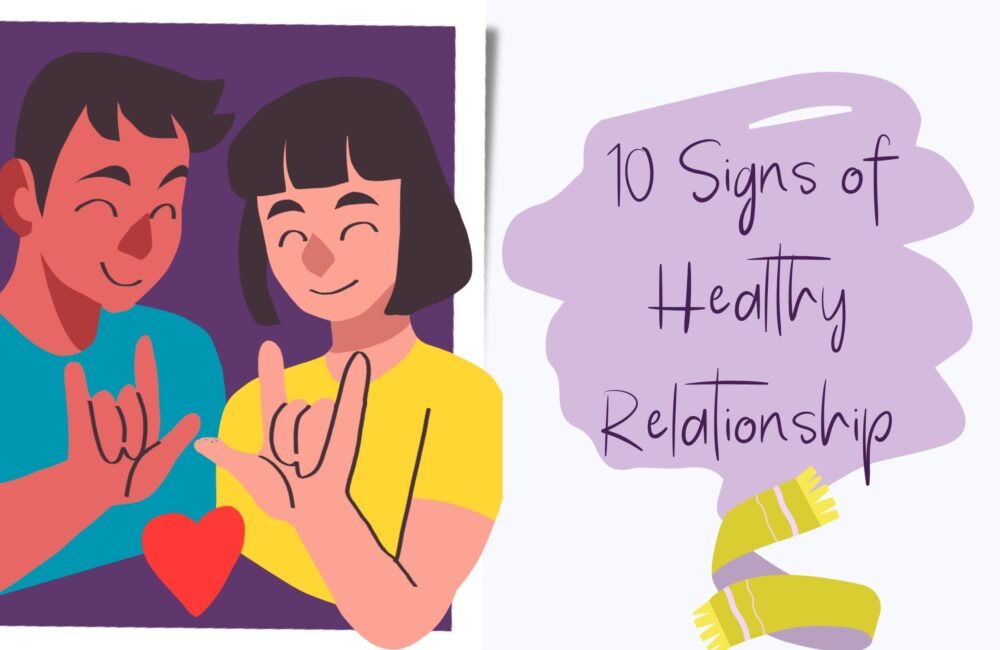

The signs of a healthy relationship include honest communication, mutual respect, reliable actions, a comfortable pace, constructive disagreement, responsive support, accountability, individual growth, welcome affection and flexibility. Look for these patterns over time, especially when one of you is tired, disappointed or saying no.
You do not need a relationship without disagreements. You need room to be a person within it: to have needs, make choices, raise concerns and influence shared decisions. This guide focuses on adult romantic relationships and offers coaching questions for everyday reflection.
Use these ten signs as conversation prompts, not a scorecard that can certify a relationship as healthy. Kind moments do not cancel out coercion, threats or violence.
On This Page
- What makes a relationship healthy?
- What recent research tells us
- 1. You can speak honestly and feel heard
- 2. Mutual respect includes boundaries and consent
- 3. Trust is supported by reliable actions
- 4. Connection happens at a pace that works for both of you
- 5. Disagreements leave room for repair
- 6. Support responds to the person’s actual needs
- 7. Apologies lead to accountability, not pressure to forgive
- 8. You can grow as individuals and negotiate shared goals
- 9. Affection and appreciation feel welcome
- 10. You adjust responsibilities when life changes
- A practical relationship check-in
- When to prioritize safety
- Frequently asked questions
- Key takeaways
- References
What Makes a Relationship Healthy?
A healthy relationship supports both people’s dignity, choice and ability to participate. Each person can ask for care, keep reasonable privacy, maintain important connections and discuss agreements. The exact routines may differ across cultures, circumstances and relationship structures.
The distinction is often in how people respond to a limit or a difficulty. A missed call can be an ordinary inconvenience. Requiring constant proof of someone’s whereabouts is a different issue. A busy week can reduce time together; repeatedly dismissing a partner’s needs calls for closer attention. For a broader overview, see our five components of a healthy relationship.
Educational note: This article offers general coaching and self-reflection guidance. It is not a clinical assessment or treatment. The ten signs and exercises are not a validated relationship test. If you feel unsafe, pressured or controlled, seek confidential support suited to your situation; you do not need to complete a joint exercise first.
What Recent Research Tells Us
Relationship research can identify patterns across groups, but it cannot decide whether a particular partnership is right for you. Four findings help inform this guide:
- Relationship experience matters. Joel and colleagues’ analysis of 43 longitudinal couple datasets identified perceived commitment, appreciation, sexual satisfaction, perceived partner satisfaction and conflict among the strongest relationship-specific predictors of quality. Changes in relationship quality were largely unpredictable from the self-report measures. This supports careful observation, not a formula for lasting love. Read the 2020 study.
- Responsiveness matters across different situations. A 2026 online survey of 1,851 Malaysian individuals found that perceived support during stress and constructive responses during conflict and good news were generally associated with better relationship quality and satisfaction. Results differed by relationship group and outcome. It was a survey, not an experiment showing that a communication exercise causes improvement. Read the 2026 study.
- Indian research adds useful context. A 2026 study of 203 heterosexual married couples in Sikkim linked positive affect with marital satisfaction through people’s perceptions of their partner’s responsiveness. The findings concern that sample; they do not establish a universal causal pathway or mean one spouse is responsible for managing the other’s mood. Read the study.
- Attention deserves discussion. A 2025 meta-analysis combined 52 studies, with 58 samples and 19,698 participants, examining partner phone-snubbing and related factors. Its findings connect this behaviour with poorer relational outcomes. Associations do not tell us that phones alone cause relationship difficulties; existing dissatisfaction and context may also matter. Read the meta-analysis.
The exercises below are practical coaching suggestions informed by these themes and respectful-relationship guidance. They have not been tested together as a ten-step programme. Choose what fits your circumstances, and pay attention to whether both people experience it as useful.
1. You can speak honestly and feel heard
Healthy communication gives both people room to describe their experience, ask questions and disagree. You do not have to find perfect words before raising an ordinary concern. A useful response shows interest in what you mean, even when your partner sees the situation differently.
For example, “When plans change at the last minute, I feel overlooked. Could we message each other earlier?” gives the other person something specific to respond to. Listening can include checking, “Have I understood you?” before offering a solution.
Coaching question: What helps each of us feel understood during a difficult conversation?
Try this: Take turns explaining one low-stakes concern. Before replying, summarize what you heard and let your partner correct it. Our guide to communication in relationships offers further context.
2. Mutual respect includes boundaries and consent
Respect becomes visible when your preferences have weight. You can say no to touch, sex, sharing a password, a social plan or discussing something immediately without being punished or pressured. Your partner can express disappointment while still accepting your decision.
A boundary describes your limits and the action you can take. It is different from controlling another person’s friendships or movements. For instance, “I will pause a conversation if insults start” describes a limit; “You cannot see your friends” restricts someone else.
Coaching question: Can both of us decline a request without fearing the reaction?
Try this: Discuss one everyday boundary when you are both calm. Use our healthy boundaries guide to prepare your wording. RAINN’s consent guidance emphasizes that sexual consent must be voluntary and ongoing.
3. Trust is supported by reliable actions
Trust grows more believable when words and behaviour line up. Agreements about money, exclusivity, time, household responsibilities or privacy are clear enough for both people to understand. When circumstances change, you communicate and renegotiate instead of quietly abandoning a commitment.
Reliability does not mean being available every minute. A partner can be dependable and still need uninterrupted work, sleep or time alone. Likewise, access to someone’s phone is not a substitute for honest agreements.
Coaching question: Which small promise would make our everyday life feel more dependable?
Try this: Choose one realistic commitment for the coming week, define what completing it means and agree how to communicate a change. Avoid promises made simply to end an uncomfortable conversation.
4. Connection happens at a pace that works for both of you
A supportive relationship allows you to discuss how often you meet, what commitment means and when to take a next step. Moving in, introducing family or making financial commitments should leave room for genuine choice. There is no universal timetable that proves a relationship is serious.
Quality time also means attention that fits your circumstances. A short, focused conversation can be more useful than an evening together in which neither person feels noticed. Work schedules, disability, caregiving and distance may change what is practical.
Coaching question: When do we actually feel connected, rather than simply being in the same room?
Try this: Agree on a brief period of uninterrupted attention, with exceptions for genuine responsibilities. A 2025 meta-analysis linked partner phone-snubbing with poorer relationship outcomes; it does not show that every phone interruption is harmful.
5. Disagreements leave room for repair
Partners do not need identical opinions. What matters is whether disagreement leaves room for both people’s dignity and influence. You can name a problem without turning it into an attack on someone’s character, and revisit an issue after taking a break.
A useful pause includes an intention to return: “I am getting overwhelmed. Can we continue after dinner?” That differs from withholding contact to punish or control. Some differences need an ongoing arrangement rather than a final winner.
Coaching question: After a disagreement, do we understand the issue better or just feel more afraid to mention it?
Try this: Discuss one issue at a time. Identify the request beneath each complaint, then agree on one testable adjustment. Our relationship conflict guide explores this further. Safety, consent and freedom from intimidation are not bargaining chips.
6. Support responds to the person’s actual needs
Being supportive means asking what would help rather than assuming. Your partner may want listening, practical help, encouragement or time to think. A well-intended solution can feel unhelpful if it bypasses what the person asked for.
Support matters during good experiences too. When your partner shares progress, you can show interest without immediately comparing achievements or shifting attention to yourself. Enthusiasm can be quiet or expressive; the useful question is whether it feels caring to the recipient.
Coaching question: What kind of support do I offer automatically, and what does my partner actually prefer?
Try this: Ask, “Would listening, ideas or practical help be most useful?” For another example, read about asking for and offering reassurance.
7. Apologies lead to accountability, not pressure to forgive
Repair involves acknowledging what happened, recognizing its impact and following through on a different action. “I interrupted you repeatedly; next time I will let you finish” gives more useful information than an apology that immediately shifts blame.
Forgiveness is a personal choice, not proof of love or a deadline someone else sets. You can accept an apology while needing time, firmer boundaries or distance. Repeated harm followed by warm words is not the same as sustained change.
Coaching question: What observable change would show that this apology has been taken seriously?
Try this: Separate intention, impact and repair. Name the behaviour, listen to its effect and agree on a realistic next action. Do not use a check-in to demand reassurance from the person who was hurt.
8. You can grow as individuals and negotiate shared goals
A healthy connection leaves room for friendships, interests, learning and personal choices. Supporting a partner’s growth does not mean agreeing to every request; it means discussing the practical consequences without dismissing their ambitions or demanding that they become a different person.
You can also talk honestly about major differences, including children, finances, location or relationship agreements. Mutual respect does not automatically make every long-term plan compatible. Naming a mismatch can be more useful than treating it as a failure of communication.
Coaching question: Which goal is mine, which is yours and which genuinely belongs to us both?
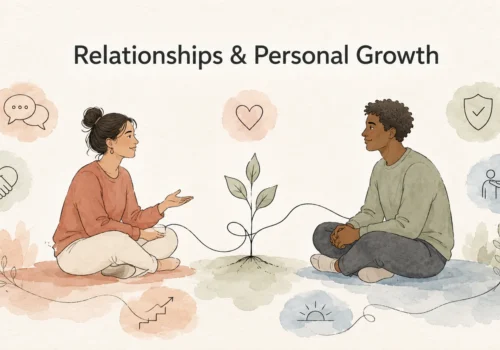
Try this: Each name one personal goal and one shared priority. Discuss the time, money and support each requires. Our guide to relationships and personal growth can help frame the conversation.
9. Affection and appreciation feel welcome
Closeness can include kind words, shared humour, practical care, emotional openness and touch that both people want. Different people enjoy different forms and amounts of affection. Neither a particular sexual frequency nor public displays of romance provide a universal test of relationship health.
Appreciation is more informative when it names something real: “You noticed I was stretched and handled dinner” tells your partner what mattered. It should not become payment for compliance or a way to dismiss a concern.
Coaching question: Which everyday gestures help each of us feel valued, and which do not?
Try this: Ask for one preferred way of receiving affection or thanks. Offer it without expecting a matching response, and respect a change of mind about touch or intimacy.
10. You adjust responsibilities when life changes
Relationships face changing workloads, money pressures, illness, caregiving and family expectations. A useful sign is the willingness to review arrangements instead of treating an old division of responsibility as permanent. Fairness may mean different contributions at different times, with both people able to speak about the load.
Count the work of noticing, planning and remembering, as well as doing. Asking one person to manage every task while the other waits for instructions can leave the workload feeling uneven even when both are busy.
Coaching question: What has changed recently, and which agreement has not caught up?
Try this: Choose one recurring task and agree who will notice it, plan it, complete it and follow up. Set a review date. The goal is a workable agreement that both people can revisit.
A Practical Relationship Check-In
If it feels safe and both people want to participate, set aside a short conversation once this week. This is a reflection exercise, not an assessment or a guarantee of improvement. You can also consider the questions privately.
- Name one recent moment when you felt respected or supported. Describe what happened rather than giving a global rating.
- Choose one small point of friction. Keep it specific: the interrupted conversation, the forgotten task or the unclear plan.
- Each say what you need, then check you understood the other person before making suggestions.
- Agree on one observable action and when to review it. For example: “Before accepting weekend plans, we will check with each other.”
- At the review, ask what became easier, what remained difficult and whether the agreement needs to change.
Avoid adding the ten signs into a total score. A serious consent or safety concern cannot be balanced out by points for affection or shared interests. If a conversation keeps becoming a debate about who is the better partner, return to one behaviour—or stop if continuing does not feel safe. Our guide to building a mindful relationship offers further ideas for slowing down and listening.
When to Prioritize Safety Over a Joint Exercise
Threats, physical or sexual violence, intimidation, forced access to money or accounts, isolation and retaliation for saying no require a different response from ordinary disagreement. Do not assume better communication will resolve a pattern of coercion, or that both people share responsibility for someone’s abusive behaviour.
If raising a concern may increase danger, seek confidential help from a trusted person or a local specialist relationship-abuse service rather than confronting the person through this exercise. If there is immediate danger, contact local emergency services when safe. Love is respect’s guidance on boundaries and expectations explains why monitoring and controlling a partner are not healthy ways to meet needs.
Frequently Asked Questions
Can a healthy relationship still have arguments?
Yes. Disagreement alone does not determine relationship health. Consider whether both people can speak, decline, pause and return to the issue without threats or humiliation, and whether agreements lead to meaningful change.
Do healthy couples need the same interests and goals?
No. Different interests can fit a healthy partnership. Major shared decisions need honest discussion, however. Respect does not automatically resolve incompatible plans about parenting, money or where to live.
Is time apart a sign that something is wrong?
Not by itself. Time for friends, rest, work or hobbies can fit a close relationship. Discuss what feels connecting and manageable to each person instead of assuming one preferred amount of togetherness is correct.
Must I forgive someone to have a healthy relationship?
Forgiveness is a choice. It cannot be demanded as proof of commitment. Look for responsibility, respect for your boundaries and sustained changes in behaviour; you may still decide that distance is appropriate.
How can we use these signs without judging each other?
Choose one sign and a recent example. Ask what worked and what would help next time. Avoid diagnosing your partner or using the list to win an argument. Either person can decline the exercise.
Can this checklist prove that my relationship is healthy?
No. It is an educational coaching guide, not a validated measure. Consider repeated behaviour, context, your own experience and safety. Seek appropriate independent support if you are unsure or feel controlled.
Key Takeaways
- Look for consistent patterns of respect, care and choice—not constant harmony.
- Notice how boundaries, disagreement, mistakes and changing needs are handled.
- Ask what support feels useful instead of assuming.
- Choose one practical experiment and review the result together only when safe.
- Safety and consent take priority over any checklist or relationship goal.
References
- Joel, S., et al. (2020). Machine learning uncovers the most robust self-report predictors of relationship quality across 43 longitudinal couples studies. PNAS.
- De Netto, P. M., et al. (2026). Through good and bad times: Perceived responsiveness in Malaysian relationship quality and satisfaction. Family Relations.
- Thargay, T., Giri, V. N., & Behera, R. R. (2026). Feeling good to feeling satisfied: The mediating role of perceived partner responsiveness. Journal of Social and Personal Relationships.
- A meta-analytic study of partner phubbing and its antecedents and consequences. (2025). Frontiers in Psychology.
- RAINN. Consent 101: Respect, Boundaries, and Building Trust.
- Love is respect. Boundaries and expectations.