
Studying psychology is not simply about learning why people behave the way they do. A strong psychology education teaches students how to evaluate evidence, design and interpret research, communicate clearly, think ethically, understand behavior in context, and apply psychological science to real-world problems.
Quick answer: The main benefits of studying psychology include stronger scientific reasoning, research and data literacy, communication skills, ethical decision-making, psychological literacy, greater understanding of human development and behavior, and preparation for a wide range of careers. These benefits are not automatic, however. They depend on the quality of the program and how actively a student engages with research methods, statistics, writing, internships, and practical experience.
The American Psychological Association’s current Guidelines for the Undergraduate Psychology Major 3.0 organize undergraduate learning around five broad goals: content knowledge and applications; scientific inquiry and critical thinking; values in psychological science; communication, psychological literacy and technology skills; and personal and professional development. That framework offers a useful evidence-based way to understand what a psychology degree is designed to develop.
On This Page
- What studying psychology actually teaches
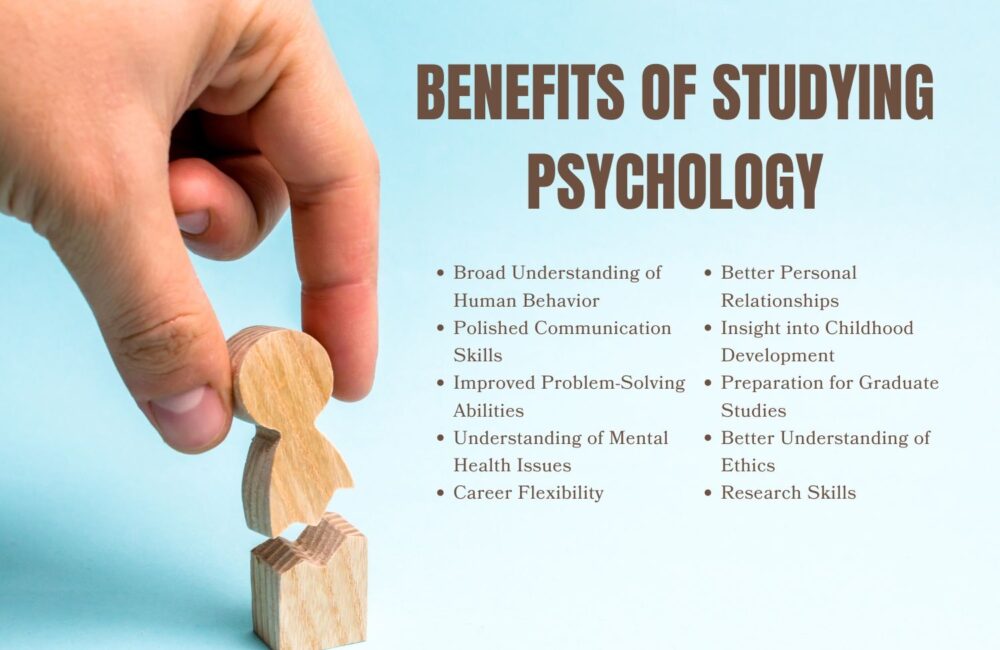
- 10 evidence-based benefits of studying psychology
- Psychology degree skills and where they can be used
- Career requirements for becoming a psychologist
- Common myths about studying psychology
- How to get more value from a psychology degree
- Frequently asked questions
- Key takeaways
- References
What Does Studying Psychology Actually Teach?
Psychology is a scientific discipline concerned with behavior and mental processes. Students may study cognition, social behavior, development, personality, biological psychology, mental health, learning, motivation, research methods and statistics.
Importantly, psychology training is not supposed to teach students to “read minds” or confidently infer hidden motives from everyday behavior. Good psychological science teaches the opposite: be cautious about assumptions, look for evidence, consider alternative explanations, understand uncertainty, and separate observation from interpretation.
10 Benefits of Studying Psychology
1. You Learn to Understand Behavior Through Evidence
Psychology gives students frameworks for understanding how biological, cognitive, social, cultural and environmental factors can influence behavior. That is more useful than relying on stereotypes or assuming one simple cause explains why someone acts a certain way.
The APA’s undergraduate guidelines emphasize applying psychological content to practical problems rather than memorizing theories alone. This can be useful in education, healthcare, management, marketing, public policy, coaching, research and many other settings where human behavior matters.
2. You Build Scientific Reasoning and Critical-Thinking Skills
Psychology students are trained to ask questions such as: What is the evidence? How was the study designed? Was the sample representative? Is the finding correlational or causal? Could bias or confounding factors explain the result?
This is especially valuable in an era of viral mental-health claims, wellness misinformation and oversimplified social-media psychology. Scientific reasoning can help students judge whether a claim is supported, exaggerated or still uncertain.
APA’s current curriculum guidance places scientific inquiry and critical thinking at the center of the psychology major, with stronger attention to statistical reasoning than earlier versions of the guidelines.
3. You Develop Research and Data Literacy
Research methods and statistics are core parts of psychology education. Students may learn how to form a research question, evaluate academic literature, choose appropriate measures, collect data, interpret results and communicate limitations.
A 2025 study of undergraduate psychology students examined psychological literacy alongside employability self-efficacy in communication, analytical inquiry, collaboration and professional development. The researchers found that psychological literacy and perceived employability skills were related but distinct outcomes, reinforcing the idea that psychology education can contribute both discipline-specific knowledge and broader workplace skills.
Research literacy is useful outside academia too. It can help in market research, user research, public health, policy, program evaluation, human resources and any role that involves interpreting evidence.
4. You Improve Communication and Psychological Literacy
Psychology students regularly read research, write evidence-based arguments, give presentations and explain complex ideas to different audiences. APA’s Guidelines 3.0 explicitly identify communication, psychological literacy and technology skills as a major learning goal.
Psychological literacy means being able to use psychological knowledge thoughtfully in everyday and professional contexts. It includes understanding behavior, recognizing the limits of evidence, communicating responsibly and considering cultural and ethical context.
If you want to explore the interpersonal side of these skills, see our guide to empathy and emotional intelligence and our article on effective communication in healthy relationships.
5. You Learn to Think More Carefully About Ethics and Diversity
Psychological research involves important questions about informed consent, privacy, confidentiality, risk, fairness and the responsible interpretation of human behavior. Modern psychology curricula also place greater emphasis on cultural context, equity, diversity and inclusion.
This does not mean psychology students automatically become more ethical than other people. It means they are repeatedly exposed to situations in which evidence, values, power, culture and human welfare have to be considered together.
6. You Gain Better Mental-Health Literacy—Without Becoming a Clinician
Psychology courses can help students understand how mental-health conditions are studied, how diagnosis differs from ordinary emotional experiences, why stigma can be harmful, and why evidence-based care matters.
However, undergraduate knowledge does not qualify someone to diagnose a friend, partner, coworker or themselves. Mental-health conditions require appropriate professional assessment. For a broader discussion of why accurate education matters, see how mental-health education improves awareness and support.
Medical and educational disclaimer: This article is for educational and career-information purposes only. Studying psychology does not qualify a person to diagnose or treat mental-health conditions. Requirements for using the title “psychologist,” providing psychological services and obtaining professional licensure vary by country and jurisdiction. If you need mental-health assessment or treatment, consult an appropriately qualified professional.
7. Psychology Offers Broad Career Flexibility
A psychology degree can lead to careers both inside and outside traditional psychology. APA reported in 2024 that psychology graduates work across 88 of 129 occupational categories, including management, marketing and social-work-related roles. In 2025, APA also highlighted National Science Foundation data showing that only a minority of psychology bachelor’s degree holders described their jobs as closely related to psychology.
That may sound surprising, but it illustrates an important point: the value of the degree often lies in transferable skills as much as in the job title. Psychology graduates may enter areas such as:
- human resources and talent development;
- marketing and consumer insights;
- research and data-support roles;
- education and student services;
- community and social-service organizations;
- sales and customer experience;
- management and project coordination;
- health-related support or administration;
- user research and human-centered design, depending on additional skills.
Students interested in professional psychology careers should also review the essential skills psychologists need.
8. You Gain a Stronger Understanding of Human Development and Relationships
Developmental and social psychology can help students understand how cognition, identity, relationships and behavior change across the lifespan. Students may also learn about attachment, social influence, group behavior, communication, prejudice and decision-making.
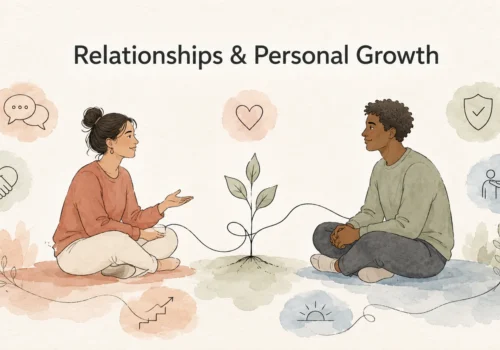
That knowledge may help someone reflect more thoughtfully on relationships, but a psychology degree does not guarantee better relationships or superior emotional intelligence. Personal change requires practice, self-awareness and behavior—not simply knowing a theory. For practical relationship guidance, see our evidence-based overview of building healthier relationships.
9. It Can Prepare You for Graduate and Professional Study
A bachelor’s degree in psychology provides useful preparation for advanced study in psychology, counseling, education, public health, social work, behavioral science, neuroscience and related disciplines, although admission requirements vary.
It is important to distinguish studying psychology from becoming a licensed psychologist. In the United States, the Bureau of Labor Statistics states that psychologists typically need an advanced degree, and licensing requirements vary by state and position. APA notes that independent clinical psychology practice generally requires doctoral-level education and licensure, although requirements vary across jurisdictions.
10. You Develop Personal and Professional Self-Reflection
APA identifies personal and professional development as a core outcome of undergraduate psychology. Students are encouraged to recognize their strengths, understand workplace expectations, collaborate effectively, build technology skills and connect academic learning to career goals.
Recent education research also suggests that practical experiences can help students make these connections more visible. A 2025 qualitative study of psychology undergraduates examined internships structured around autonomy, competence and relatedness and explored how these experiences supported students’ perceptions of professional development and employability. Because this was qualitative research, it should not be interpreted as proof that internships guarantee employment—but it reinforces the value of applying classroom skills in real settings.
Psychology Degree Skills and Where They Can Be Used
| Skill developed | How psychology builds it | Where it may be useful |
|---|---|---|
| Critical thinking | Evaluating theories, evidence and competing explanations | Business, policy, research, education, healthcare |
| Data literacy | Statistics, research methods and interpretation | Research, analytics, marketing, program evaluation |
| Communication | Research writing, presentations and explaining evidence | Management, education, HR, customer-facing roles |
| Ethical reasoning | Consent, confidentiality, research ethics and professional values | Healthcare, research, public service, management |
| Human-behavior knowledge | Social, cognitive, developmental and organizational psychology | Marketing, HR, education, health and service design |
| Psychological literacy | Applying psychological science to real-world questions | Community work, leadership, policy and everyday decision-making |
Does a Psychology Degree Guarantee a Career as a Psychologist?
No. A bachelor’s degree is usually the beginning of the pathway rather than the professional qualification for independent psychological practice.
For context, the U.S. Bureau of Labor Statistics reports that psychologists held about 204,300 jobs in 2024 and projects overall psychologist employment to grow 6% from 2024 to 2034, faster than the average for all occupations. Clinical and counseling psychologist employment is projected to grow faster than the overall psychology category. These figures apply to the United States and should not be generalized to other countries.
Career outcomes also depend on specialization, graduate education, work experience, geographic location, licensing rules and the ability to translate academic skills into language employers understand.
Common Myths About Studying Psychology
Myth: Psychology is mostly common sense
Psychology uses systematic research methods to test claims about behavior. Findings sometimes support everyday intuition and sometimes contradict it. The discipline’s value comes from testing assumptions rather than treating intuition as evidence.
Myth: Psychology teaches you to read people
Psychology can improve your understanding of behavioral patterns, but it does not allow reliable mind-reading or diagnosis from body language, personality impressions or isolated behavior.
Myth: A psychology bachelor’s degree makes you a psychologist
No. Professional titles and licensing requirements are regulated. Independent practice generally requires advanced education, supervised training and licensure.
Myth: Psychology only leads to therapy careers
Psychology graduates work across many sectors. The degree can support careers involving research, people, communication, behavior, data and decision-making, especially when students deliberately develop workplace-ready skills.
How to Get More Value From Studying Psychology
- Take research methods and statistics seriously. They are among the most transferable parts of the degree.
- Learn to explain your skills. Do not simply tell an employer you studied psychology; explain how you analyzed data, wrote reports, presented findings or solved problems.
- Seek practical experience. Internships, research assistantships, volunteering and project work can help connect academic knowledge with workplace demands.
- Build technology skills. Depending on your goals, this may include spreadsheets, statistical software, survey tools, data visualization or qualitative-analysis tools.
- Create a portfolio of evidence. Save research posters, reports, presentations and project summaries that demonstrate what you can do.
- Plan early if you want a regulated career. Check graduate-school, accreditation and licensing requirements before choosing a path.
Frequently Asked Questions
Is studying psychology worth it?
It can be, particularly for students interested in human behavior, research, communication and people-centered careers. Its value is stronger when students actively build research, data, writing, technology and practical workplace skills rather than relying on the degree title alone.
What skills do psychology students learn?
Common skills include scientific reasoning, critical thinking, research methods, statistics, written and oral communication, ethical reasoning, teamwork, psychological literacy and professional development.
Can I become a psychologist with only a bachelor’s degree?
Usually not for independent professional practice. Requirements vary by jurisdiction, but psychologists typically need advanced graduate education and professional licensure.
Does psychology involve statistics?
Yes. Statistics and research methods are central to modern psychological science because they help students evaluate evidence, test hypotheses and understand the strength and limitations of research findings.
What careers can a psychology graduate pursue?
Depending on education and experience, psychology graduates may work in research, marketing, HR, education, community services, customer insights, management, health-related organizations and many other sectors. Licensed psychology careers generally require further training.
Can studying psychology improve your relationships?
It can provide useful knowledge about communication, social influence, emotion and development, but studying those topics does not automatically change behavior. Healthier relationships require practice, respect, communication and accountability.
Is psychology considered a science?
Yes. Contemporary psychology uses systematic observation, measurement, experimentation, statistical analysis and other research methods to study behavior and mental processes, while also recognizing the complexity of social and cultural context.
Key Takeaways
- The strongest benefits of studying psychology include scientific reasoning, research literacy, communication, ethical thinking and understanding human behavior.
- APA’s current undergraduate guidelines emphasize five areas: psychological knowledge and applications, scientific inquiry, values, communication and psychological literacy, and professional development.
- A psychology degree can support many careers, but students benefit from deliberately translating academic skills into workplace-ready evidence.
- A bachelor’s degree does not usually qualify someone to diagnose or treat mental-health conditions or independently practice as a psychologist.
- Research methods, statistics, internships, writing and technology skills can substantially increase the practical value of the degree.
- Psychology can inform everyday life, but it does not provide mind-reading abilities or guarantee better relationships or mental health.
References
- American Psychological Association. APA Guidelines for the Undergraduate Psychology Major, Version 3.0. Approved 2023.
- Halonen JS, Kreiner DS. What students should know about APA’s Guidelines for the Undergraduate Psychology Major. APA Psychology Student Network. 2025.
- American Psychological Association. The market-ready psychology major: Skills-focused resources for psychology instructors. 2024.
- Stamm KE, Schwartz BM. Improving perceptions of the psychology major. American Psychological Association. 2025.
- Machin MA, Gasson N. The measurement of psychological literacy and employable skills self-efficacy in undergraduate psychology students. Scholarship of Teaching and Learning in Psychology. 2025;11(2):188-199.
- Qualitative study on enhancing employability in psychology undergraduates through SDT-inspired internships. 2025.
- U.S. Bureau of Labor Statistics. Occupational Outlook Handbook: Psychologists. Current 2024-2034 projections.
- American Psychological Association. Licensure and practice: qualifications to become a licensed psychologist.