
Work-life balance is often presented as a scheduling problem: wake up earlier, make a better to-do list, and become more disciplined. Those habits may help, but they do not solve every problem. Long hours, understaffing, unpredictable schedules, low job control, financial pressure, caregiving, discrimination, and an unhealthy workplace culture can make balance difficult even for highly organized people.
A better work-life balance does not mean dividing every day equally between work and personal life. It means having enough time, energy, flexibility, and control to meet important responsibilities without allowing work to consistently damage your health, relationships, sleep, or sense of identity.
Balance may look different during a deadline, a new job, parenthood, illness, study, or caregiving. The goal is not a perfect routine. It is a sustainable pattern that includes recovery and can be adjusted when life changes.
Important: Persistent exhaustion, anxiety, low mood, panic, severe sleep problems, substance misuse, or thoughts of self-harm are not simply signs that you need better time management. They may require professional or urgent support.
What Does Work-Life Balance Really Mean?
Work-life balance is the ability to participate in work while maintaining enough capacity for health, relationships, household responsibilities, rest, interests, and community life. It includes both time balance and energy balance.
You may technically finish work at 6 p.m. but remain mentally occupied by emails, conflict, unfinished tasks, or fear about the next day. In that situation, your schedule may look balanced while your attention and nervous system remain at work.
A sustainable balance usually includes:
- reasonable and reasonably predictable working hours;
- clear expectations and priorities;
- some control over how work is completed;
- protected recovery time;
- supportive relationships inside and outside work;
- space for sleep, food, movement, healthcare, and caregiving;
- the ability to disconnect without fear or guilt; and
- access to adjustments when health or life circumstances change.
Why Work-Life Balance Matters
The World Health Organization identifies excessive workloads, understaffing, long or inflexible hours, limited control, poor support, bullying, discrimination, job insecurity, inadequate pay, and conflicting home and work demands as risks to mental health at work.
Research from the National Institute for Occupational Safety and Health also emphasizes that job stress develops when job requirements do not match a worker’s capabilities, resources, or needs. Long hours and shift work can reduce sleep and recovery time while increasing fatigue, negative mood, errors, and conflict between work and family responsibilities.
This is why work-life balance should not be treated only as a personal wellness goal. Employers influence it through staffing, workload, schedules, management, psychological safety, leave policies, pay, and the way they respond when employees raise concerns.
Signs Your Work-Life Balance May Be Unhealthy
- You regularly work beyond agreed hours without recovery time.
- You feel guilty, anxious, or unsafe when taking leave or breaks.
- Work messages repeatedly interrupt evenings, meals, sleep, or days off.
- You have little energy left for relationships or basic self-care.
- You postpone medical appointments, exercise, meals, or sleep because of work.
- You are increasingly irritable, detached, cynical, or emotionally numb.
- You rely on caffeine, alcohol, nicotine, sedatives, or other substances to manage the work cycle.
- You think about work constantly, even when no immediate action is needed.
- Your responsibilities are impossible to complete within available time and resources.
- You feel that your worth depends mainly on productivity.
These signs do not automatically mean you have burnout or a mental health condition. However, they are useful signals that something needs to change. Our detailed guide to burnout signs, causes, and recovery explains when ordinary pressure may be becoming persistent exhaustion and detachment.
10 Practical Ways to Build Better Work-Life Balance
1. Start with a reality-based time audit
For one or two weeks, track where your time and energy go. Include paid work, unpaid overtime, commuting, caregiving, household tasks, study, appointments, sleep, meals, and recovery. The purpose is not to judge yourself. It is to see whether your current commitments fit into the available hours.
Mark tasks as:
- essential and time-sensitive;
- important but flexible;
- delegable or shareable;
- optional; or
- unnecessary.
A crowded schedule cannot always be fixed by becoming faster. Sometimes the solution is reducing, renegotiating, delaying, or sharing responsibilities.
2. Define what “enough” looks like
Perfectionism expands work. Decide what a satisfactory result looks like before beginning a task. Ask which parts truly affect safety, quality, clients, grades, or deadlines and which parts reflect personal pressure to overperform.
Try replacing “I must finish everything” with questions such as:
- What are the three most important outcomes today?
- What can be completed adequately rather than perfectly?
- What requires clarification from my manager?
- What should be moved to another day?
3. Set boundaries that match your actual job
Advice to simply “switch off at 5 p.m.” is not realistic for every worker. Nurses, hospitality workers, business owners, caregivers, freelancers, and employees across time zones may have different schedules. A useful boundary is specific, communicated, and adapted to the role.
Examples include:
- “I check messages until 7 p.m. and respond to anything else the next morning.”
- “I am available for urgent calls during this window only.”
- “I can complete either task A or task B today. Which has priority?”
- “I need two days’ notice for schedule changes whenever possible.”
- “I do not take meetings during my medical appointment or caregiving time.”
Boundaries are harder to maintain in unsafe workplaces. If raising a concern could risk retaliation, document communications, review workplace policy, and consider support from human resources, a union, professional association, employment adviser, or legal professional as appropriate.
4. Create a transition out of work
Remote and hybrid work can blur the line between work and home. A short transition helps signal that the work period has ended.
- Write tomorrow’s first task before logging off.
- Close work applications and silence nonessential alerts.
- Change clothes, shower, walk, stretch, or prepare a meal.
- Use a separate work area where possible.
- Avoid checking messages “just once” unless you are genuinely on call.
The transition does not need to be elaborate. Its purpose is to reduce unfinished-task rumination and help your attention return to personal life.
5. Protect recovery before optimizing productivity
Sleep, meals, movement, social connection, and healthcare are foundations, not rewards. Repeatedly removing them to create more work time often reduces concentration and resilience. A wearable may help you notice schedule drift, but it is important to understand what sleep-tracker data can—and cannot—tell you before relying on a nightly score.
Choose a few minimum standards that you protect during busy periods, such as:
- a consistent sleep opportunity;
- regular meals and access to water;
- brief movement or daylight;
- one meaningful personal contact;
- a medication or healthcare routine; and
- some time without work input.
For practical guidance on maintaining these foundations, read our evidence-based health and wellness tips.
6. Use breaks as part of work, not an escape from it
Brief breaks can reduce prolonged sitting, visual strain, and mental fatigue. The most restorative break depends on the work. Someone doing physical labour may need seated rest, while a desk worker may benefit from standing, walking, or looking away from a screen.
A break may involve:
- stepping outside;
- eating away from the desk;
- stretching or changing posture;
- speaking with a supportive colleague;
- slow breathing; or
- doing nothing for a few minutes.
Scrolling through upsetting news or work messages may not provide the same recovery.
7. Discuss workload, not only emotions
When work is unsustainable, a conversation limited to “I feel stressed” may produce generic advice. Bring concrete examples:
- the number of tasks and available hours;
- conflicting priorities;
- unpredictable scheduling;
- insufficient staffing or training;
- repeated after-hours expectations;
- safety concerns; and
- the specific change that would help.
You might request clearer priorities, redistributed work, protected focus time, cross-training, a schedule adjustment, additional staffing, or a review of deadlines. A healthy workplace should examine job design rather than treating every strain as an individual failure.
Our article on psychological safety in the workplace explains why employees need to be able to raise concerns, ask questions, and admit limitations without humiliation or punishment.
8. Plan for caregiving and invisible labour
Work-life balance advice often ignores unpaid labour. Childcare, elder care, disability management, cooking, cleaning, emotional support, and household administration consume real time and energy.
Where possible:
- list recurring household tasks rather than relying on memory;
- divide responsibility, not only the physical task;
- rotate difficult duties;
- simplify meals and routines during demanding periods;
- use community, family, or paid support when accessible; and
- include caregiving needs when negotiating work arrangements.
Not everyone has equal access to flexibility or support. A realistic plan should acknowledge financial limits and avoid blaming people for structural constraints.
9. Use flexibility intentionally
Flexible and remote work can reduce commuting and help with caregiving, but they may also extend the workday or create constant availability. Agree on core hours, expected response times, meeting windows, and what counts as urgent.
For shift workers, balance may involve protected recovery after night work, advance notice of rosters, limits on consecutive shifts, and sufficient rest between shifts rather than a conventional weekday routine.
10. Review your balance regularly
A routine that worked six months ago may no longer fit. Review your work-life balance after major changes such as promotion, relocation, parenthood, illness, study, job loss, or a new caregiving role.
Ask:
- What is currently draining the most energy?
- What gives me genuine recovery?
- Which boundaries are being ignored?
- What can I change personally?
- What requires a workplace or family-level change?
- What support have I not used?
A Simple Weekly Work-Life Balance Check
| Area | Question | Possible next step |
|---|---|---|
| Workload | Can my core work be completed within paid hours? | Clarify priorities or discuss capacity. |
| Recovery | Am I getting enough sleep and downtime to function? | Protect a minimum recovery window. |
| Boundaries | When does work enter personal time? | Set one specific communication boundary. |
| Relationships | Do important people receive any focused attention? | Schedule one device-free connection. |
| Health | Am I postponing care, meals, movement, or medication? | Restore one basic health routine. |
| Support | What am I carrying alone? | Delegate, request help, or use a service. |
| Meaning | Does my week include anything personally valuable? | Protect a small activity unrelated to productivity. |
What Employers Can Do
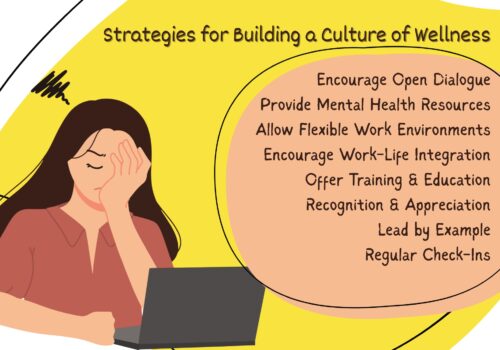
Work-life balance improves when workplaces address psychosocial risks rather than relying only on resilience workshops or wellness apps.
- Set realistic workloads and staffing levels.
- Provide predictable schedules and adequate rest.
- Clarify roles, priorities, and decision-making authority.
- Respect leave and nonworking time.
- Train managers to respond constructively to concerns.
- Prevent bullying, harassment, and discrimination.
- Offer reasonable accommodations and flexible work where feasible.
- Improve pay, job security, and career development.
- Provide confidential mental health support.
- Consult workers when changing jobs or schedules.
Workplace anxiety is not always caused by an individual’s thinking style. Unclear expectations, poor management, insecurity, conflict, and unsafe culture may all contribute. Read more about the causes and signs of workplace anxiety.
Common Myths About Work-Life Balance
| Myth | Reality |
|---|---|
| Balance means equal hours for work and life. | It means a sustainable distribution of time, energy, and control that may change across life stages. |
| Better time management fixes everything. | It cannot correct understaffing, insecure work, low pay, discrimination, or impossible workloads. |
| Successful people are always available. | Constant availability can reduce recovery and create unsafe expectations for others. |
| Remote work automatically improves balance. | It can help, but it may also blur boundaries and lengthen the workday. |
| Feeling guilty means you are neglecting work. | Guilt may reflect workplace culture, perfectionism, or learned beliefs rather than an actual failure. |
| Self-care prevents burnout. | Self-care may support recovery, but workload, staffing, control, fairness, and workplace culture also matter. |
When to Seek Professional Support
Consider speaking with a mental health professional or healthcare provider when work-related anxiety, low mood, sleep problems, exhaustion, irritability, or concentration difficulties persist and interfere with daily functioning.
Professional support can help you assess whether symptoms relate to work stress, burnout, depression, anxiety, sleep problems, a medical condition, or several factors together. Therapy may support coping and decision-making, but it should not be used to make harmful working conditions seem acceptable.
These signs it may be time to see a therapist can help you decide when extra support may be useful.
Seek urgent help if you have thoughts of suicide or self-harm, cannot keep yourself safe, experience severe panic or confusion, or are using substances dangerously. Contact emergency services or a crisis service in your location and involve a trusted person when possible.
Key Takeaways
- Work-life balance is about sustainable time, energy, recovery, and control—not equal hours every day.
- Poor balance may result from job design, not personal failure.
- Use specific boundaries, workload discussions, recovery routines, and realistic priorities.
- Remote and flexible work need clear expectations to prevent constant availability.
- Employers are responsible for reducing excessive workloads and other psychosocial risks.
- Persistent distress deserves professional support, not only productivity advice.
Frequently Asked Questions
What is a healthy work-life balance?
A healthy balance allows you to meet important work responsibilities while maintaining enough time and energy for sleep, health, relationships, caregiving, and personal interests.
How can I improve work-life balance when I cannot reduce my hours?
Focus on predictable boundaries, clear priorities, genuine breaks, shared household responsibilities, reduced after-hours contact, and recovery between shifts. Also raise workload or scheduling concerns when it is safe to do so.
Does working from home improve work-life balance?
It can reduce commuting and improve flexibility, but it may also blur boundaries. Clear work hours, communication expectations, and a shutdown routine help.
How do I stop feeling guilty about taking time off?
Remind yourself that leave and recovery are legitimate parts of sustainable work. Notice whether guilt comes from actual unfinished responsibilities, perfectionism, or a workplace culture that rewards overwork.
Is poor work-life balance the same as burnout?
No. Poor balance can contribute to burnout, but burnout involves persistent exhaustion, detachment or cynicism, and reduced effectiveness. Similar symptoms may also occur with depression or medical conditions.
Can mindfulness improve work-life balance?
Mindfulness may help some people notice stress and disengage from work thoughts, but it cannot fix excessive workloads or unsafe conditions. It is one optional tool rather than a complete solution.
When should I consider changing jobs?
Consider your health, safety, finances, values, available accommodations, management response, and realistic alternatives. A career counsellor, therapist, trusted mentor, union representative, or financial adviser may help you assess the decision.
References
- World Health Organization: Mental Health at Work
- NIOSH: About Stress at Work
- NIOSH: Supporting Mental Health in the Workplace
- NIOSH: How Shift Work and Long Work Hours Increase Health and Safety Risks
- NIOSH: Stress at Work
This article is for educational purposes and does not replace personalized medical, mental health, employment, legal, or financial advice.