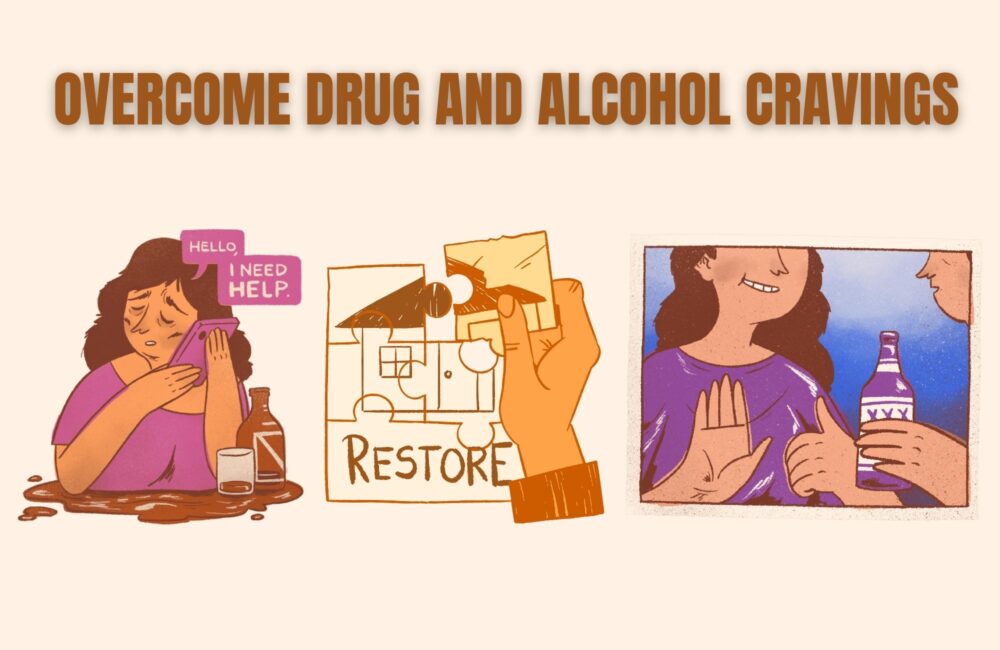

Drug and alcohol cravings can feel sudden, physical, and urgent. A craving may show up as a thought, an image, restlessness, tension, a taste or smell memory, or a strong belief that using will bring relief. It can be intense without being a command you must follow.
Cravings are common during recovery and can also occur when someone is trying to cut down. They may be triggered by people, places, emotions, stress, pain, sleep loss, withdrawal, or memories linked with substance use. Their presence does not mean treatment has failed or that a return to use is inevitable.
The safest approach is to combine immediate coping skills with a longer-term treatment plan. This article replaces unproven “hacks” with strategies used in cognitive behavioral therapy, mindfulness-based relapse prevention, medication treatment, peer support, and harm-reduction care.
What Is a Craving?
A craving is a strong desire or urge to use alcohol or another drug. It can involve several systems at the same time:
- Learning and memory: The brain connects substance use with certain people, places, routines, smells, music, or emotions.
- Reward and habit: Repeated use strengthens automatic patterns and makes substance-related cues more attention-grabbing.
- Stress and withdrawal: Anxiety, irritability, low mood, poor sleep, pain, or withdrawal discomfort may increase the urge to use for relief.
- Executive control: Stress, sleep loss, intoxication, and repeated substance use can make planning and impulse control harder.
Cravings often rise, peak, and fall like a wave, although they may return later. Fighting them with panic can make them feel more threatening. Learning to notice, delay, and respond differently can weaken the connection between an urge and substance use.
For a broader explanation of addiction and treatment, read Substance Use Disorder: Causes, Signs and Treatment.
Important Safety Warning Before You Try to Manage Cravings Alone
Craving management is not the same as withdrawal treatment. Abruptly stopping some substances can be dangerous.
- Alcohol withdrawal can cause seizures, hallucinations, severe confusion, and delirium tremens.
- Suddenly stopping benzodiazepines after regular use can cause life-threatening withdrawal, including seizures.
- Opioid tolerance can fall after a period of abstinence. Returning to a previous dose can cause a fatal overdose.
Seek medical advice before stopping alcohol, benzodiazepines, or other sedatives if you have been using them regularly or heavily. Urgent care is needed for seizures, hallucinations, severe shaking, confusion, chest pain, breathing problems, unresponsiveness, extreme agitation, psychosis, or suicidal thoughts.
10 Evidence-Based Strategies for Drug and Alcohol Cravings
1. Name the Craving and Rate Its Intensity
Start by replacing “I need to use” with “I am having a craving.” This small language shift separates the experience from the action.
Rate the urge from 0 to 10 and note:
- Where you feel it in your body
- What happened just before it began
- Which thought is making it stronger
- What you expect the substance to do for you
A brief record can reveal patterns such as Friday evenings, conflict, loneliness, payday, pain, boredom, or seeing a former using contact. Tracking should be simple and useful, not obsessive.
Our guide to substance-use triggers and coping strategies explains how internal and external cues can be included in a relapse-prevention plan.
2. Change the Environment Quickly
When possible, leave the high-risk situation before debating with the craving. Environmental changes reduce the number of cues competing for your attention.
Examples include:
- Leaving a bar, party, dealer’s area, or unsafe home
- Removing alcohol or drugs from your living space
- Blocking or muting high-risk contacts
- Changing the route you take home
- Going to a public, substance-free place
- Giving money or cards temporarily to a trusted person if spending is a trigger
Avoidance is not weakness during early recovery. It is risk management. Exposure to higher-risk situations can be reconsidered later with professional support and stronger coping skills.
3. Delay the Decision
A craving often creates urgency: “I have to decide now.” You usually do not. Commit to delaying action for 10 or 20 minutes.
During the delay:
- Move away from access to the substance.
- Set a timer.
- Contact a support person.
- Use one coping activity.
- Rate the craving again when the timer ends.
If the urge remains high, repeat the cycle or move to a safer setting. The goal is not to prove that you will never use again. It is to avoid acting during this specific wave.
4. Practice Urge Surfing
Urge surfing is a mindfulness-based skill that involves observing a craving without fighting, feeding, or obeying it.
Try this process:
- Sit or stand safely and take a steady breath.
- Notice where the craving appears in your body.
- Describe the sensations: tight, hot, restless, dry, heavy, tingling, or hollow.
- Watch how the sensations change from moment to moment.
- Remind yourself, “This is uncomfortable, but it is temporary.”
- Continue until the intensity shifts or you can take the next safe action.
The purpose is not to force the urge away. It is to learn that a craving can be experienced without automatically turning into substance use.
5. Challenge the Thought That Gives the Craving Permission
Cravings often come with a thought that makes using seem reasonable:
- “One time will not matter.”
- “I deserve relief.”
- “I have already ruined the day.”
- “I cannot cope without it.”
- “No one will know.”
Do not argue with yourself for too long. Use a short response grounded in experience:
| Craving thought | Balanced response |
|---|---|
| “One drink will be fine.” | “One has often lowered my control and led to more.” |
| “I need this to calm down.” | “It may give short relief, but it usually worsens the problem afterward.” |
| “I failed, so recovery is over.” | “A lapse is a signal to get support and restart the plan.” |
| “This craving will last forever.” | “The intensity can change even if it returns later.” |
6. Use a Competing Activity That Requires Action
Passive distraction may not be enough when an urge is strong. Choose an activity that changes your location, body state, or attention.
Useful options may include:
- A brisk walk in a safe area
- A shower
- Preparing and eating a simple meal
- Cleaning one room
- Calling someone while walking
- Doing a puzzle, game, or hands-on task
- Attending an in-person or online recovery meeting
- Going to a gym, library, place of worship, or other substance-free setting
The activity should be easy to start, available at the time cravings usually occur, and incompatible with obtaining or using the substance.
7. Check Hunger, Anger, Loneliness, Fatigue, Pain, and Sleep
Cravings often become stronger when basic needs are neglected. Ask:
- Have I eaten?
- Am I angry, ashamed, frightened, or overwhelmed?
- Have I been alone for too long?
- Am I exhausted or sleep-deprived?
- Is untreated pain or anxiety driving the urge?
Meeting these needs does not treat addiction by itself, but it can lower vulnerability. Persistent depression, trauma symptoms, anxiety, chronic pain, or insomnia should be treated alongside the substance-use problem.
Trauma-related cravings often require integrated care. See PTSD and Addiction: Connection, Risks and Treatment.
8. Contact Support Before the Craving Becomes a Crisis
Do not wait until you have purchased the substance or arrived at a high-risk location. Create a short support list in advance:
- A clinician or treatment program
- A recovery coach or sponsor
- A trusted family member or friend
- A peer-support meeting
- A safe place you can go
Use a direct message such as: “My craving is 8 out of 10. I am near a trigger and need help leaving.” Specific requests make it easier for another person to respond.
Mutual-help options include 12-step programs, SMART Recovery, LifeRing, Women for Sobriety, and other local or culturally specific groups. No single group suits everyone.
9. Create an If–Then Plan and Carry Your Reasons
An if–then plan turns a predictable trigger into a rehearsed response:
- “If I pass the liquor store, then I will call my brother and take the next route.”
- “If I am offered a drink, then I will say, ‘No thanks, I am not drinking,’ and order something else immediately.”
- “If I receive a message from a former dealer, then I will block the number and contact my counselor.”
- “If I feel the urge after an argument, then I will leave the room, walk for 15 minutes, and use my crisis card.”
Keep a short note on your phone listing:
- Your main reasons for change
- The consequences you want to avoid
- Three people to contact
- Three safe places to go
- Your next treatment appointment
10. Use Treatment That Matches the Substance
Craving skills work better when the underlying substance-use disorder is treated. Effective treatment may include cognitive behavioral therapy, motivational enhancement, contingency management, family therapy, community reinforcement, peer support, and medication.
Alcohol use disorder
FDA-approved medications include naltrexone, acamprosate, and disulfiram. Naltrexone can reduce the rewarding effects of alcohol and craving for some people. Acamprosate may help maintain abstinence. Disulfiram creates an unpleasant reaction if alcohol is consumed and requires careful medical selection and adherence.
Opioid use disorder
Buprenorphine and methadone reduce opioid withdrawal and cravings and are associated with lower overdose and mortality risk. Extended-release naltrexone is another option for appropriately selected patients after opioid withdrawal. Detoxification alone is not recommended treatment for opioid use disorder because return to use and overdose risk remain high.
Stimulant use disorder
There is currently no FDA-approved medication specifically for stimulant use disorder. Contingency management—providing structured rewards for treatment participation or verified goals—has the strongest evidence and is considered a standard behavioral treatment.
Treatment should also address housing, relationships, trauma, employment, physical health, and other factors that support recovery. Some people benefit from structured recovery housing; learn more in How Sober Living Supports Long-Term Recovery.
A Simple Craving Action Card
| When this happens | Do this next |
|---|---|
| I notice an urge | Name it, rate it, and identify the trigger |
| The urge is increasing | Leave the setting, delay 10 minutes, and start urge surfing |
| I am thinking about obtaining the substance | Call support, remove access to money or transport, and go to a safe place |
| I have obtained or used the substance | Stop if possible, do not use alone, contact help, and use overdose precautions |
| I have severe withdrawal or overdose symptoms | Use emergency services immediately |
Overdose Prevention During Cravings or a Return to Use
For people who use opioids—or substances that may be contaminated with fentanyl—overdose planning is essential.
- Carry naloxone and make sure others know where it is.
- Do not use opioids alone.
- Avoid mixing opioids with alcohol, benzodiazepines, or other sedatives.
- Remember that tolerance may be lower after detox, treatment, hospitalization, incarceration, or a period of abstinence.
- Call emergency services after giving naloxone because its effect may wear off before the opioid does.
Naloxone reverses opioid overdose; it does not treat stimulant, alcohol, or sedative intoxication. However, it may still be appropriate when the substance is unknown because fentanyl contamination can occur.
What the Original Article Got Wrong
Several popular strategies do not have good evidence as primary craving treatments.
- Herbal supplements: St. John’s wort is not an established treatment for substance cravings and has many serious medication interactions. Valerian can cause sedation and may interact with alcohol or other depressants.
- Cold showers: A shower may interrupt a routine, but cold exposure has not been established as a reliable treatment for drug or alcohol craving and may be unsafe for some people.
- Aromatherapy and tea: Pleasant rituals may be calming, but they should not be described as treatments for addiction.
- Willpower alone: Cravings are shaped by learning, withdrawal, stress, access, mental health, and social conditions. Needing treatment is not a character failure.
What to Do After a Lapse
A lapse is a return to use after a period of reduction or abstinence. It does not have to become a prolonged relapse.
- Stop the episode as soon as you safely can.
- Use overdose precautions, especially after lost tolerance.
- Contact a clinician, recovery support, or trusted person.
- Remove remaining substances and access where possible.
- Review what happened without shame: trigger, thought, opportunity, and missing support.
- Update the plan and return to treatment promptly.
Shame can increase isolation and further use. Accountability is important, but it works best when combined with practical learning and support.
Common Myths About Cravings
Myth: A craving means I secretly want to return to addiction
A craving can be an automatic learned response. It does not define your goals or values.
Myth: Strong cravings are impossible to resist
They can be difficult, but intensity usually changes. Treatment, medication, environmental changes, and support can reduce risk.
Myth: Avoiding triggers is cowardly
Avoidance is often appropriate during early recovery, especially when exposure offers little benefit and high risk.
Myth: Medication is replacing one addiction with another
Medications such as buprenorphine and methadone are evidence-based treatments that reduce withdrawal, craving, overdose risk, and mortality when appropriately prescribed.
Myth: One lapse erases all progress
A lapse is serious, but it can be used to strengthen treatment and prevention planning.
When to Seek Professional Help
Professional assessment is especially important when:
- Cravings are frequent, intense, or worsening
- You repeatedly use more than intended
- You have tried to stop but cannot
- Use is affecting work, relationships, health, or safety
- You have withdrawal symptoms
- You use opioids, benzodiazepines, or multiple substances
- You have depression, trauma, psychosis, or suicidal thoughts
- You have had an overdose or are using alone
Quality treatment may be available through primary care, addiction medicine, outpatient therapy, intensive outpatient programs, residential care, opioid treatment programs, telehealth, or recovery-support services.
Frequently Asked Questions
How long does a drug or alcohol craving last?
Intensity often rises and falls over minutes, but cravings can recur. Duration varies by substance, withdrawal state, stress, cues, and treatment.
Should I distract myself or face the craving?
Both can help. Leaving a trigger and using a competing activity may be safest, while urge surfing can teach you to tolerate unavoidable internal urges.
Can medication stop cravings completely?
Medication may reduce craving, withdrawal, or reward, but no medication guarantees that urges will disappear. It works best as part of a broader plan.
Are alcohol cravings a sign of alcohol use disorder?
Craving is one diagnostic symptom, but diagnosis depends on the overall pattern of alcohol use and impairment.
Is it safe to detox from alcohol at home?
Not always. People with regular heavy use, previous seizures, severe withdrawal, major medical conditions, or multiple-substance use may need supervised withdrawal management.
What should I do if I crave opioids after a period of abstinence?
Contact treatment support quickly, carry naloxone, and remember that reduced tolerance increases overdose risk. Medication treatment can reduce craving and mortality.
Do supplements reduce substance cravings?
No herbal supplement is a proven general treatment for drug and alcohol cravings. Some interact dangerously with medications or sedatives.
Where can I find treatment?
Ask a primary-care clinician, addiction specialist, or local mental-health service. In the United States, SAMHSA’s treatment locator provides confidential information about licensed programs.
Key Takeaways
- A craving is a temporary but important urge, not a command.
- Triggers may be external, emotional, physical, or related to withdrawal.
- Leave high-risk settings, delay action, and contact support early.
- Urge surfing teaches you to experience an urge without automatically acting on it.
- Short cognitive responses can challenge thoughts that give permission to use.
- Alcohol and benzodiazepine withdrawal can be life-threatening and may require medical care.
- Reduced opioid tolerance after abstinence greatly increases overdose risk.
- Evidence-based medications can reduce cravings and improve outcomes for alcohol and opioid use disorders.
- Contingency management has the strongest evidence for stimulant use disorder.
- A lapse should lead to safety steps and treatment adjustment, not shame or abandonment of recovery.
References
- NIAAA: How to Stop Alcohol Cravings
- NIAAA: The Brain in Addiction and Recovery
- NIAAA: Evidence-Based Treatment for Alcohol Use Disorder
- ASAM Clinical Practice Guideline on Alcohol Withdrawal Management
- CDC: Treating Opioid Use Disorder
- CDC: Lifesaving Naloxone
- ASAM/AAAP Clinical Practice Guideline on Stimulant Use Disorder
- U.S. Department of Veterans Affairs: Urge Surfing
- FDA: Benzodiazepine Dependence and Withdrawal Warning
- NCCIH: Herb–Drug Interactions and St. John’s Wort
- SAMHSA: Substance Use Disorder Treatment Options
- SAMHSA: Treatment Locators
This article is for education only. It does not replace medical detoxification, addiction treatment, medication advice, overdose response, emergency care, or an individualized recovery plan.